
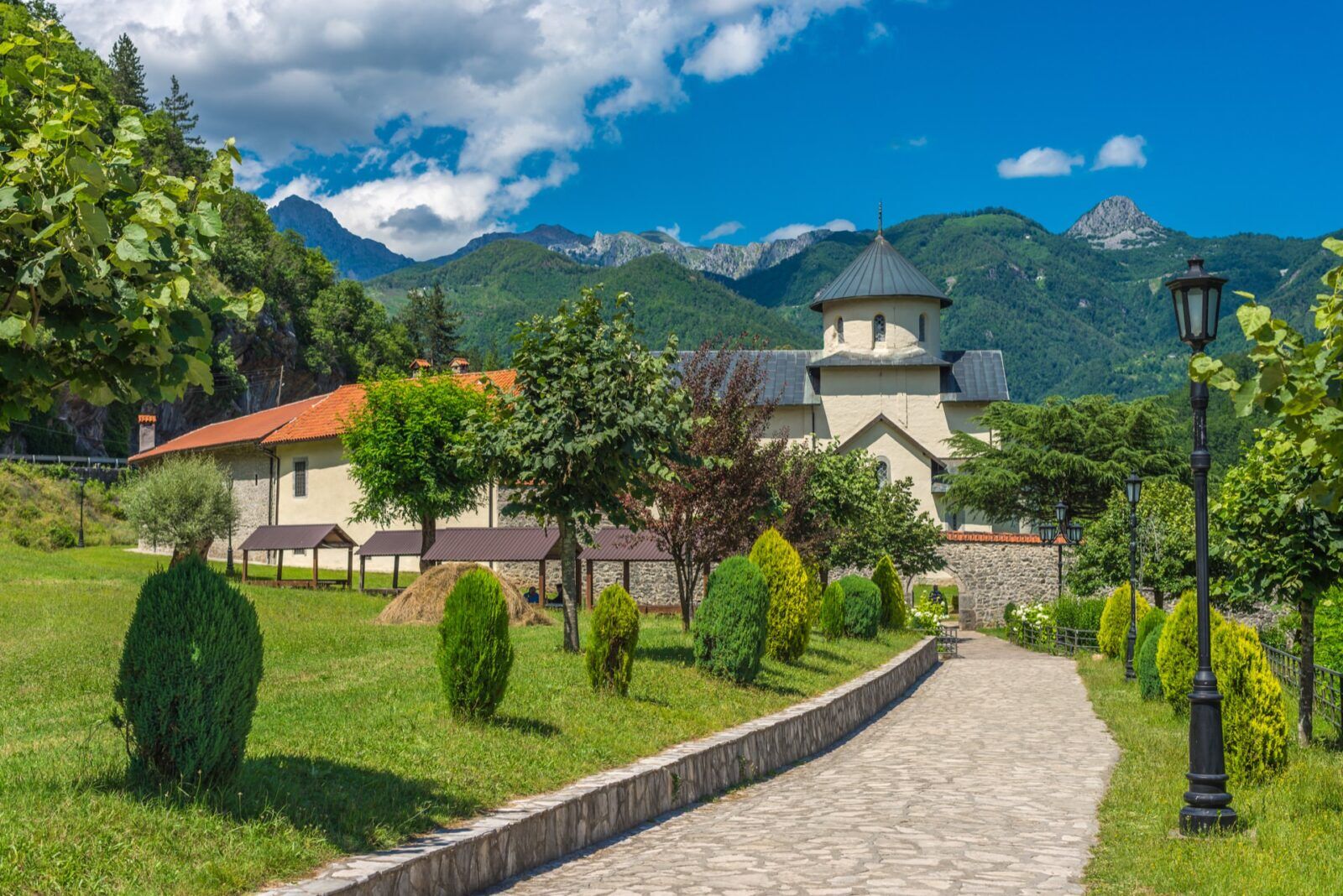
Monastery Moraca
Monastery Moraca is a 13th-century Serbian Orthodox monastery located on the right bank of the River Moraca near Kolasin, Montenegro. Founded in 1252 by Stefan Nemanja, it features a fortress-like stone wall, Romanesque architecture, and renowned frescoes spanning centuries, making it a key cultural and spiritual site.
History and Architecture of Monastery Moraca
The Monastery Moraca was built in 1252 by Stefan Nemanja, as recorded on an inscription above the west entrance. This mystical sacral edifice is surrounded by a high stone wall, resembling a medieval fortress, with sleeping quarters that hold local legends. According to one tale, the monastery was constructed from special yellow stone transported via a human chain from Tusine, tens of kilometers away.
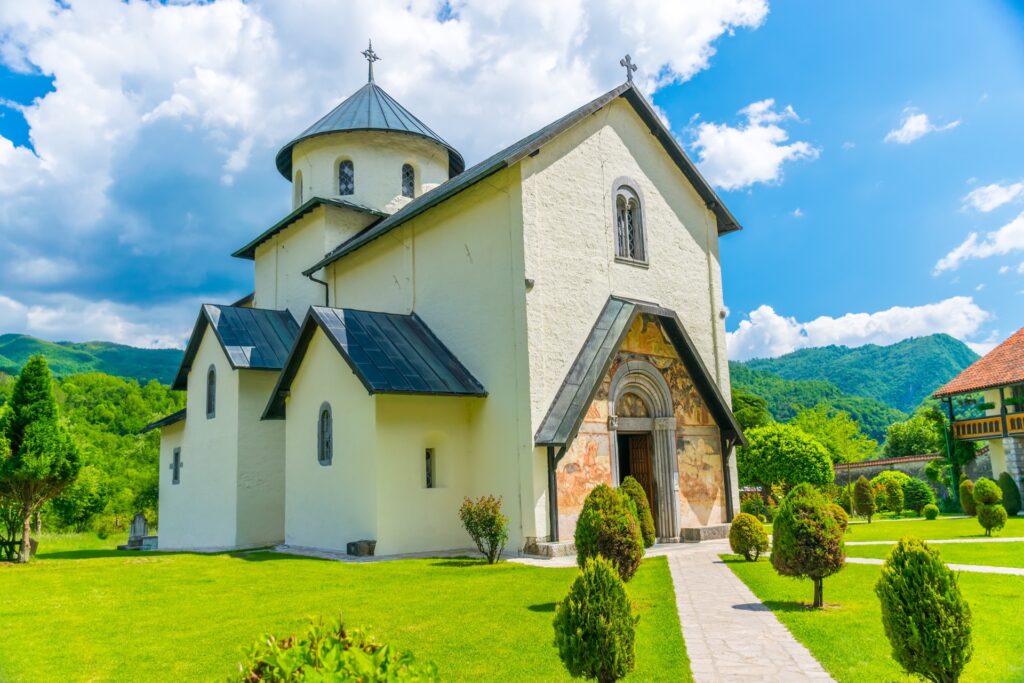
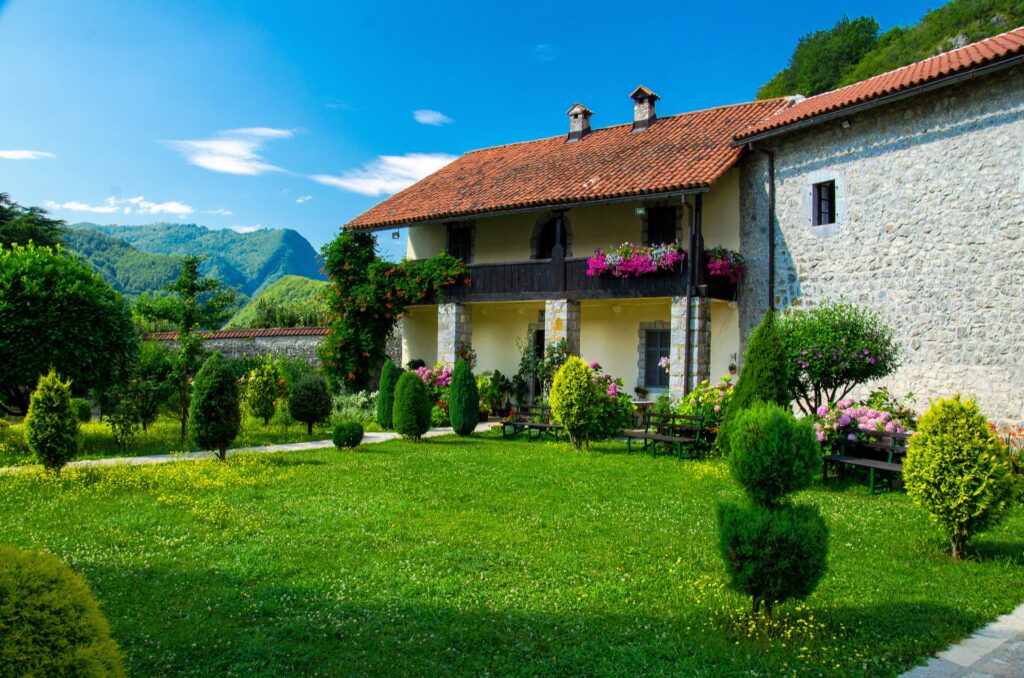
The complex includes the Synod church Uspenja Bogorodice, the small church of Sveti Nikola, and sleeping quarters. The Synod church, built in the style of Raska churches, features a half-circle apsidal, dome, and rendered walls, with a Roman-style main entrance. Consequently, this design contrasts with coastal-style churches, highlighting its unique architectural heritage.
Artistic Significance and Frescoes
The Monastery Moraca is renowned for its frescoes, which date from the 13th, 16th, and 18th centuries. The oldest and most famous is “Gavran hrani proroka Iliju” from the 13th century, depicting the life of Prophet Ilija. Other notable works include “Pomazivanje careva i proroka” and “Rodjenje Svetog Jovana krstitelja.” Moreover, frescoes from the 16th century form the largest preserved entity of wall painting from that period in the region.
The Monastery Moraca painting school is a major achievement of Byzantine art. It features fine proportions, non-hierarchical figures, and thick lines with mild movements. Indeed, its color tone modeling surpasses that of Studenica and Milesevo, showcasing a plastic style that pioneered painting in the area.
Icons and Relics
Alongside frescoes, the monastery houses valuable icons from the 18th century, such as those of Sveti Sava and Sveti Luka, considered among the best on the Balkan Peninsula. Relics include the hand of Sveti Haralampije, engraved crosses, a marble baptistery, and a rod believed to have belonged to Sveti Sava. A special highlight is a 16th-century walnut cross in the altar, said to have taken 11 years to make.
The Monastery Moraca offers an unforgettable experience for visitors, blending history, art, and spirituality in a serene setting.