
Billiard Palace
Montenegro’s Billiard Palace, also known as Njegos’s Billiard pool hall, is a historic stone building near Cetinje monastery, built in 1838 with Russian aid. It served as a residence, state institution, and now houses Njegos’s museum, featuring a pool table from 1839 and a relief map of Montenegro.
History and Architecture of the Billiard Palace
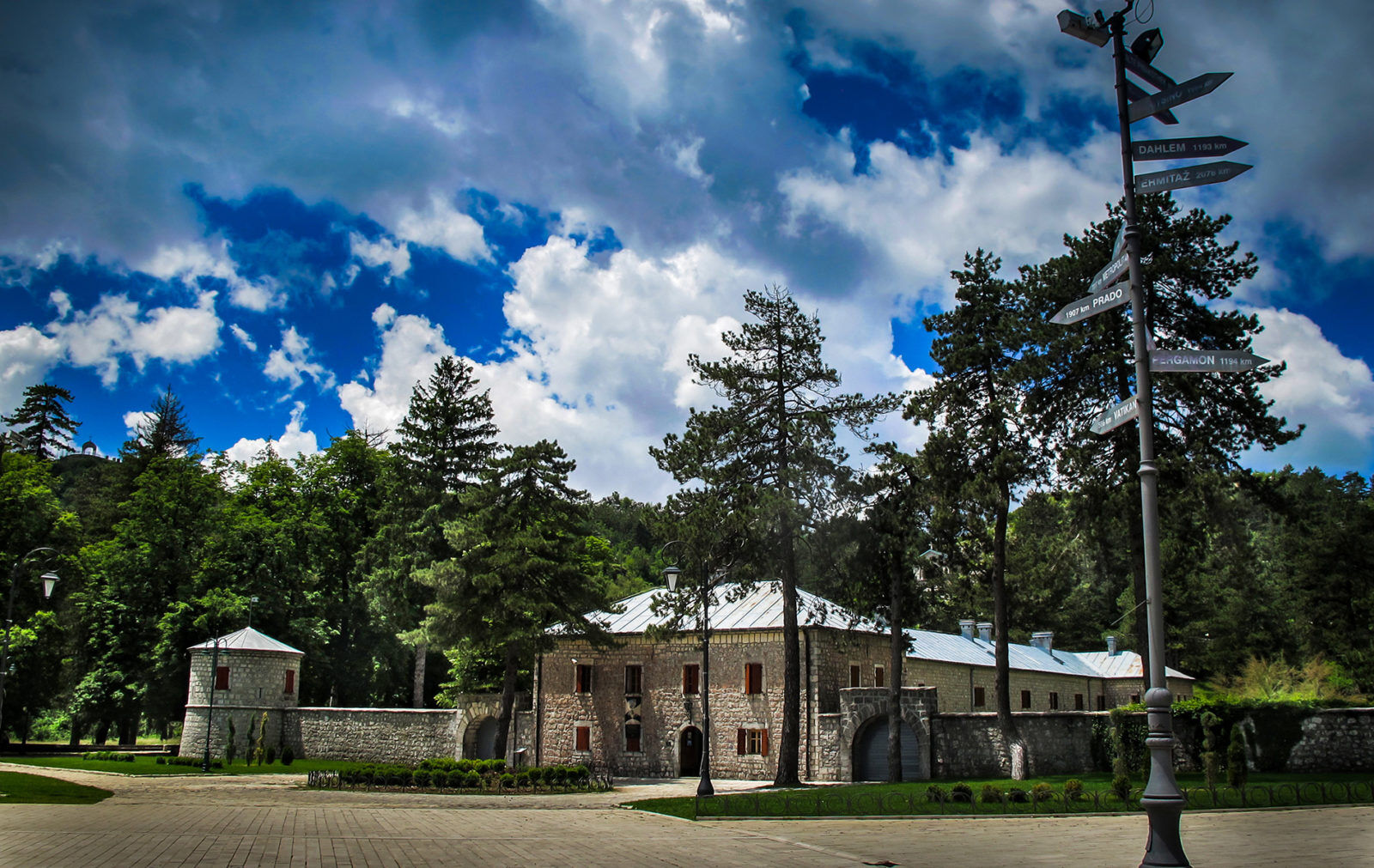
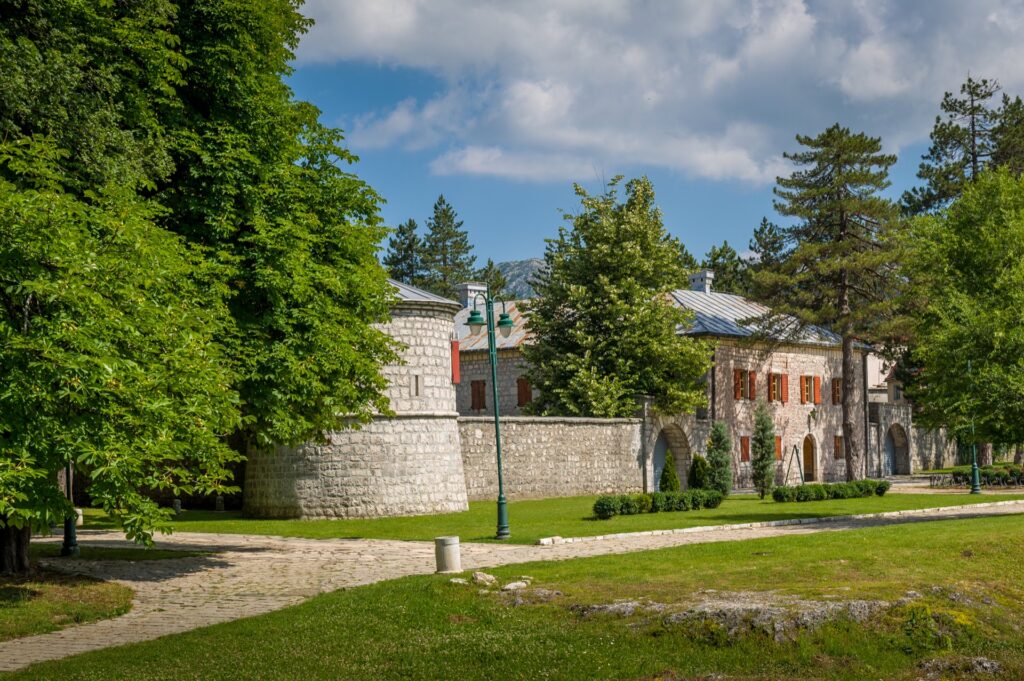
In the immediate vicinity of Cetinje monastery, we can see that Njegos’s residence is situated, better known as the Billiard Palace, built in 1838 with significant financial help from Russia and by the plan of the Russian emissary architect Jakov Ozereckovski. Initially called the New House, it soon got the name Njegos’s Billiard pool hall after the arrival of a pool table in Cetinje. Its appearance suits the architectonic concept of a medieval castle. The Billiard Palace has the shape of a rectangular stone building with a floor; it is modestly processed, covered by lead, encircled with a big stone wall with round towers in corners and gates on all sides. Indeed, in the Billiard Palace, there are 25 rooms, with 11 on the ground floor and 14 on the upper floor.
The most interesting for tourists is the biggest room in the Billiard Palace, where Njegos’s pool table is kept today. The first pool table in Cetinje came from Vienna in 1839, financed by Russia, with which Montenegro had important diplomatic and military relations. Apart from his literary work and diplomacy, Njegos was a great lover of shooting and pool, often winning against opponents.
Uses and Evolution Over Time
A certain number of rooms in the Billiard Palace were used by Njegos for personal necessities, while many served the Senate, Montenegrin Prince’s guards, and other state organs, as well as for prominent guests. Up to 1867, the Billiard Palace served as a residence, first to Prince Danilo and then briefly to Nikola. This famous building is mainly connected to Njegos. Moreover, beside residential uses, the Billiard Palace served various state institutions, including Njegos’s printing shop founded in 1834, theology, high school, and a girl’s institute. Also, at the end of the XIX century, it was used for accommodation of Ministries and as a military institution, with two towers removed in those years.
Over time, the Billiard Palace was rebuilt, changing both exterior and interior, with significant changes during Prince Danilo’s reign when another building was added. At the beginning of the XX century, a spacious edifice of the Military Ministry was built. Consequently, the most drastic changes occurred in 1910 when the fence and remaining two towers were removed to open side views towards the monastery. Still, in 1951, on the celebration of 100 years of Njegos’s death, its original appearance was restored. During 1919/1917, a relief map of Montenegro was placed in a pavilion cutting the wall of the fence. Since restoration, Njegos’s and Ethnographic museums were founded in the Billiard Palace. With renewal in 1979 after a catastrophic earthquake, the space is now used only as Njegos’s museum.
The Billiard Palace is protected by law as a monument of the 1st category in Montenegro.