
Monastery Savina
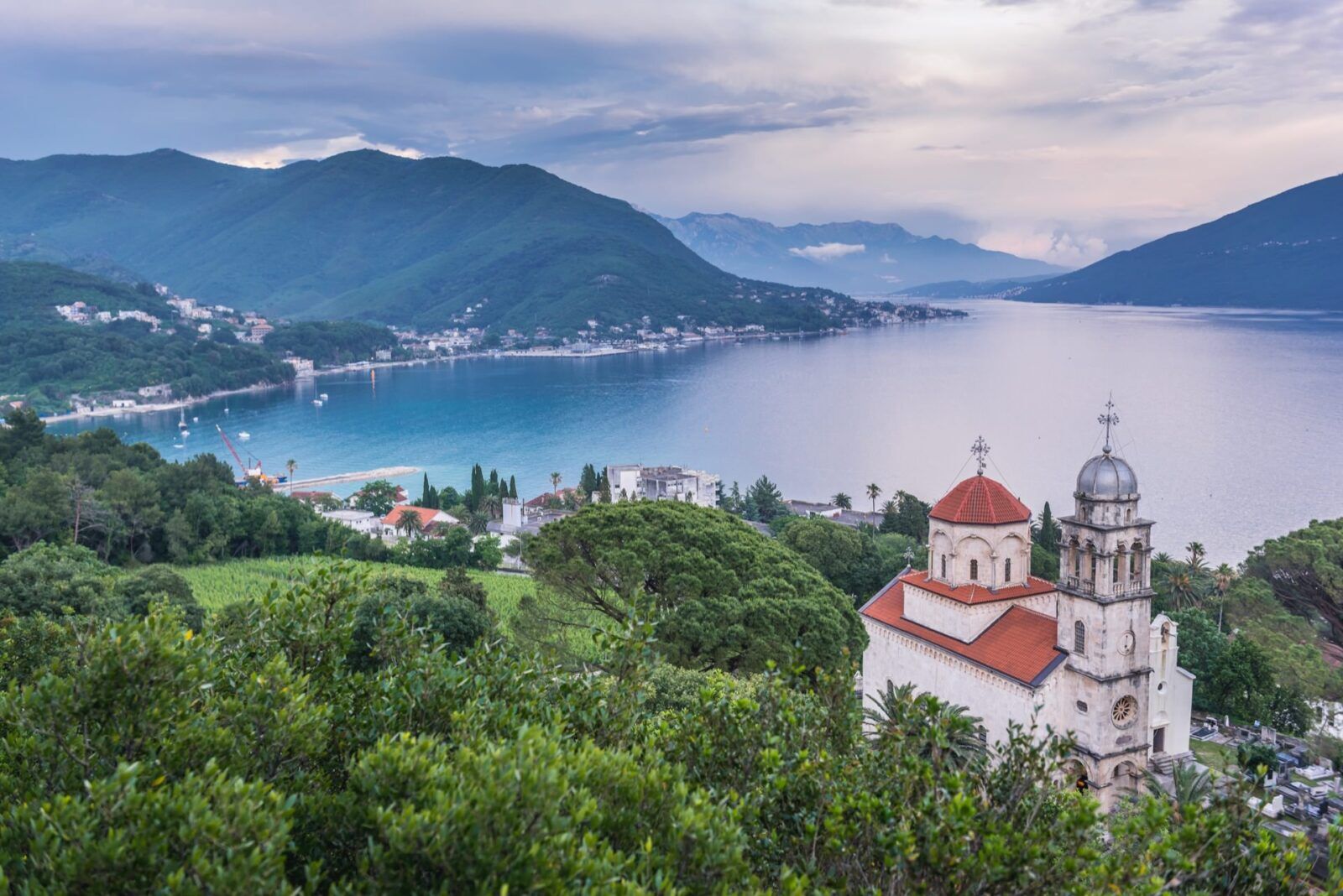
Monastery Savina is a medieval Orthodox monastery in Montenegro, located near Herceg Novi in the Bay of Kotor. It features three churches, including two dedicated to the Dormition of the Mother of God, and is renowned for its historical frescoes and baroque architecture.
Location and Historical Overview
The Monastery Savina is located in one of the most beautiful bays in the world – bay of Boka Kotorska. It is situated 2 kilometers away from Herceg Novi in a thick Mediterranean forest. This location offers stunning views over Lustica and Ostri Rt (Sharp cape), as well as Topla with its hinterland plain Sutorina. On the east side, the view stretches towards Tivat bay, above which rises the giant Lovcen mountain.
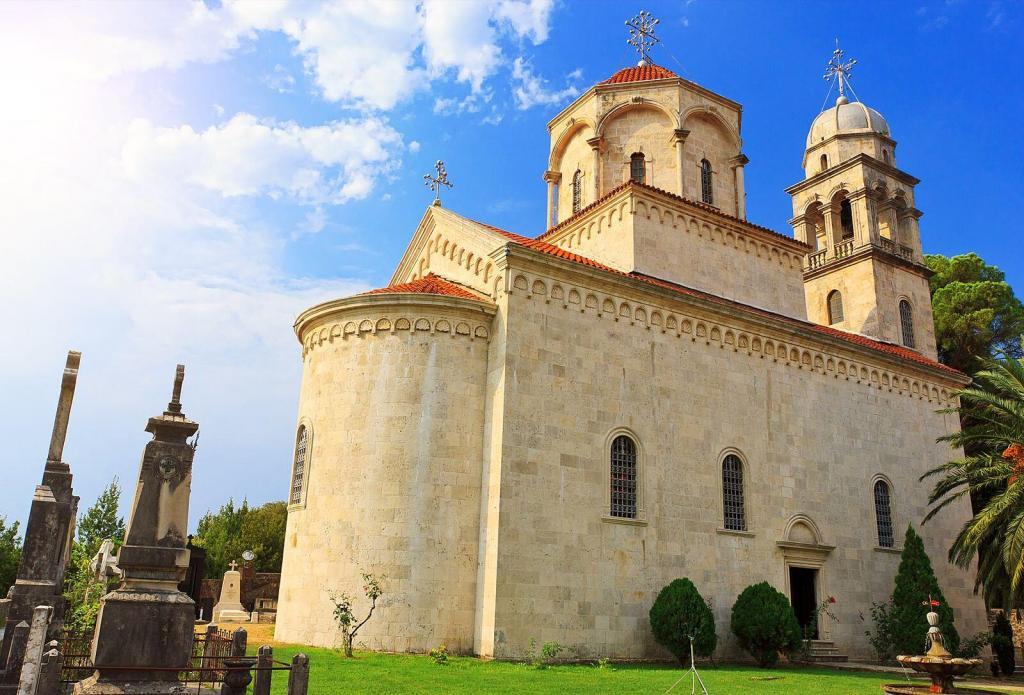
This medieval monastery has three churches, two of which are dedicated to Uspenje Bogorodice (Dormition of the Holy Mother of God). It includes sleeping quarters with a treasury and a separate church dedicated to Svet Sava (St. Sava). The Small and Big churches, along with the sleeping quarters, form one entity, while the third church, a parish one, is located on the mount above the quarters and is also dedicated to Sveti Sava. According to legend, Sveti Sava built this church in the XIII century, and it is named after him.
Architectural and Artistic Highlights
Small Church of Sveto Uspenje Bogorodice
The Small church of Sveto Uspenje Bogorodice (St. Dormition of the Holy Mother of God) is notable for its frescoes depicting Great holidays and the Life of Jesus. These were created by the famous Kotor painter Lovro Dobricevic, one of the greatest masters on the coast in the middle of the XV century. These frescoes exemplify a mixture of Byzantine icon painting and Gothic expression. According to some records, this church dates from 1030. It features one transept with a half-circle apsidal, a belfry, and an oculus above the west portal. It was renewed in 1831 with the help of prior Makarije, and at that time, its old pictures were also repaired. The builder of the Small church, which dates from the XV century, is unknown, but many indicators suggest it was constructed by the aristocrat Bosnian family Kosaca.
Monastery Sleeping Quarters
The monastery sleeping quarters were initially built as a regular rectangle, comprising west and north wings. The north wing had 4 cells, and the west wing included a pergola, an episcopacy hall, and a library. The building was torn down in 1937 to await renewal, which began in 1725. Later repairs included opening new doors and installing suitable windows.
Big Church
The Big church dates from the XVIII century and is the work of Dalmatian master builder Nikola Foretic. It represents one of the most beautiful facilities from the age of Dalmatian baroque. The belfry is particularly notable, decorated with wreaths, rosettes, and niches, giving the façade a baroque silhouette. The decision for its construction was made by the synod of the monastery bishops in 1755. Danilo Joanorajovic went to Venice for authorization, and Venetian doge Alvizo Mocenigo granted permission, a document still found in the monastery’s treasury today.
Treasury
The treasury of the Monastery Savina houses Russian, Italian, and Krit icons, as well as parchments and shod Gospels.