
Lake Skadar National Park
Lake Skadar National Park is Montenegro’s largest lake and a premier national park, renowned for its rich biodiversity, historical sites, and recreational opportunities in a stunning mountainous setting.
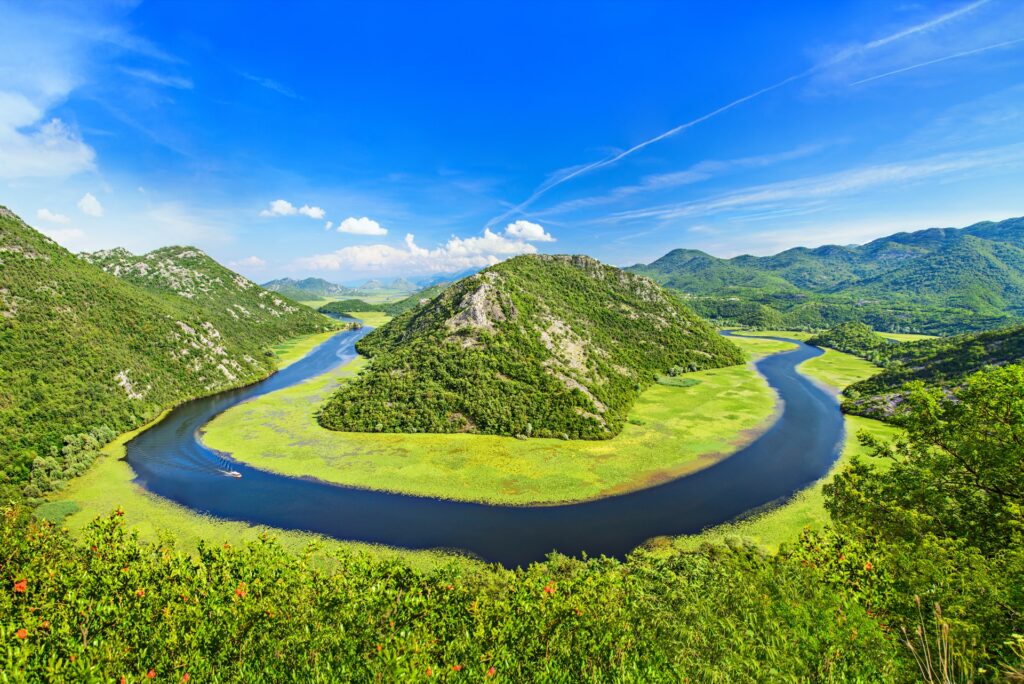
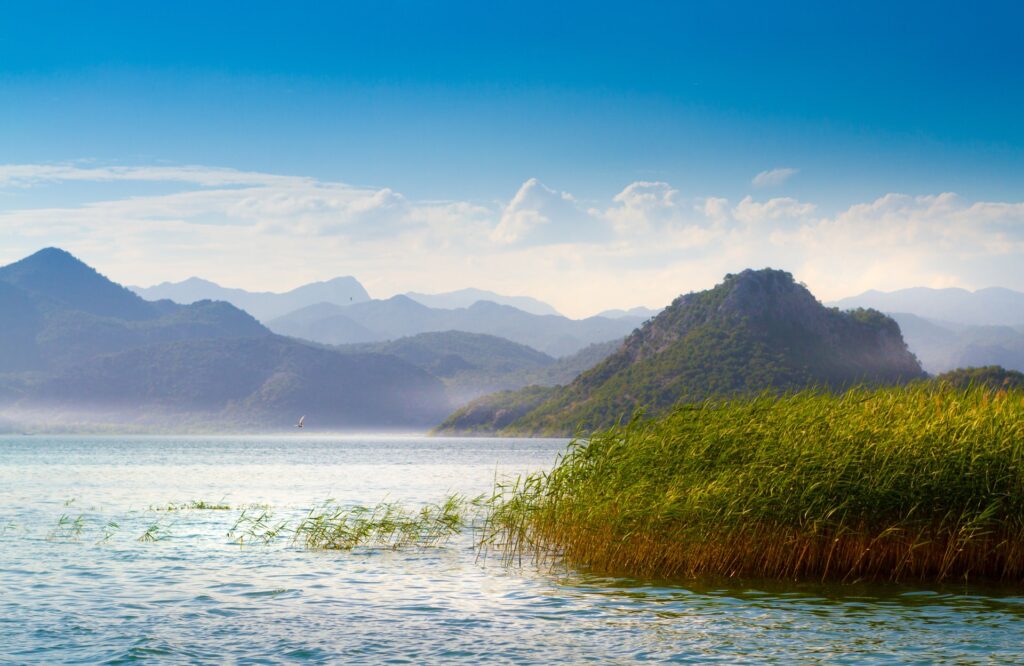
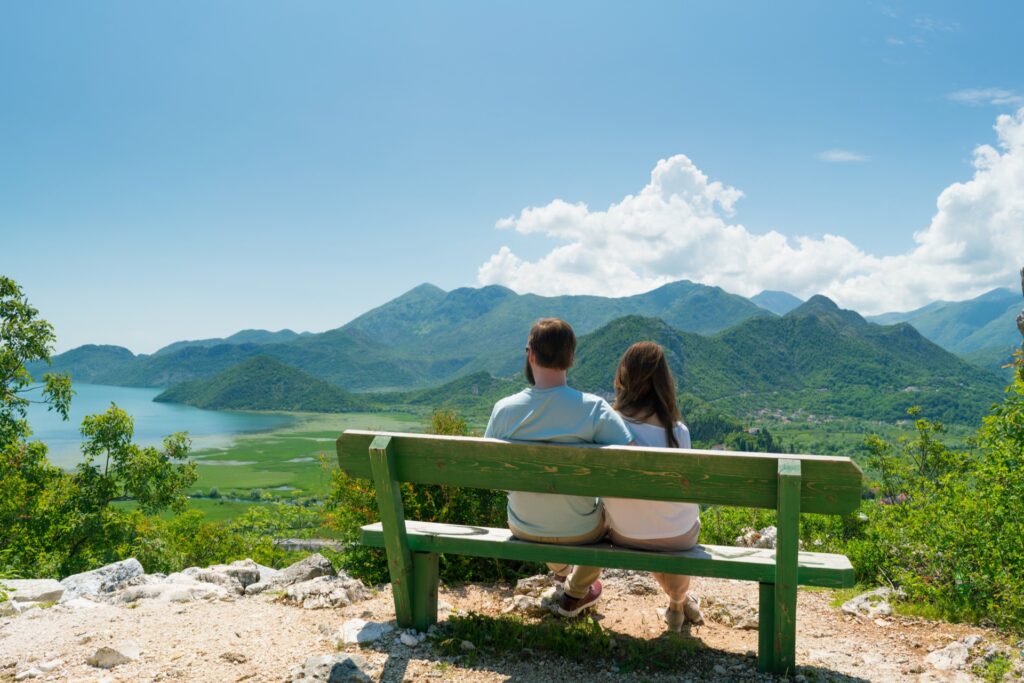
The lake is located in the Zeta – Skadar valley, surrounded by mountains, and it’s 7 km away from the Adriatic Sea. Two thirds of Lake Skadar is in Montenegro, and the rest is in Albania. The size of the lake varies from 530 to 370 km²; it is 44 km long and 14 km wide. Its coastline is very sharp, especially on the north-west side.
Lake Skadar is the largest lake on the Balkan Peninsula, with fresh water, and one of the largest national parks in Montenegro. It’s extremely famous for its diversity of flora and fauna. The lake itself is unusual for the mutual vicinity of different living areas and their feeding chains.
Biodiversity and Natural Features
Birds
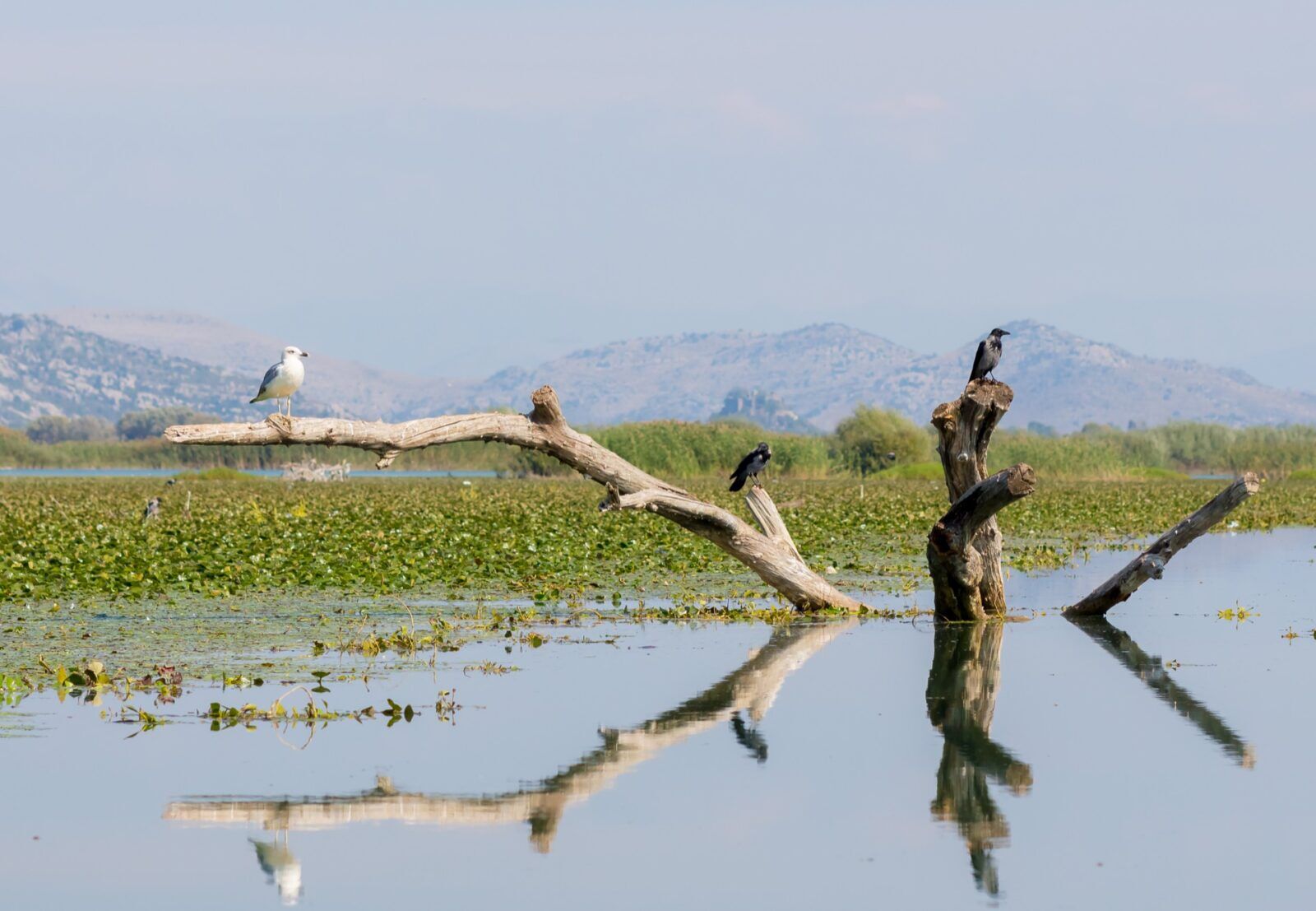
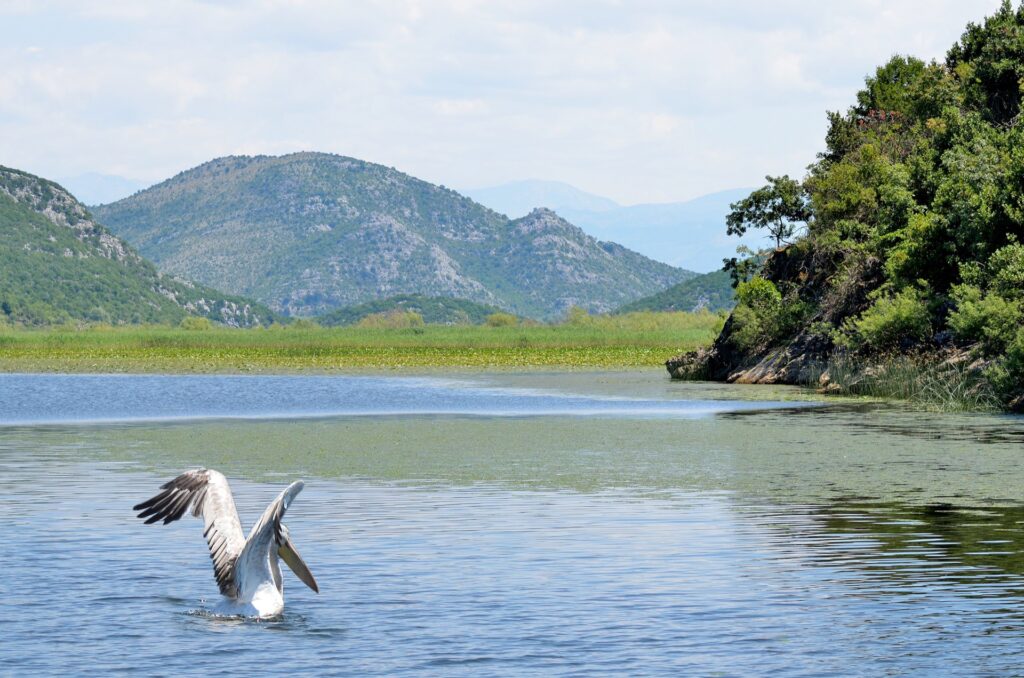
There are many kinds of birds. Indeed, 270 kinds inhabit Lake Skadar. Around 90% are migratory and of international importance. During migrating season, white little egrets, white spoonbills, and various ducks pass over this region. Cormorants nest in north swamps, representing one of three most important colonies globally. Rare curly pelicans nest at floating peat islands in the north end.
Water Fauna
There are 50 species of fish and 3 snake-like creatures in the lake. The most important economically are ukljeva and carp.
Flora
The plant world here is very important and differs in flood-prone regions, small stone islands, and steep cliffs. There are three rare, protected plants and trees, plus over 30 rare plants in the park.
Cultural and Historical Significance
In the region of Lake Skadar, there are 20 monasteries, churches, villages, fortresses, and sacred monuments. This lake is a witness to Montenegrin history from the 11th century to now. Around the lake, there are 18 important historic monuments.
Human history around Lake Skadar dates back to early times for health and resources. Consequently, the earliest written documents are from the 11th century, during the first Montenegrin dynasty. The turning of Roman Catholics to Orthodox led to many monasteries and churches built around 1400 AD. In 1478, Turks occupied the region and ruled until 1878, when Montenegro was liberated. During this period, Montenegro survived under Cetinje Metropolitans. Some strongholds were used by Italians during WWII.
Recreation and Practical Information
Bird watching, fishing, hunting, boat rides, swimming, and sunbathing are main recreational activities around the lake.
The park was founded in 1968 to protect the wonderful surroundings of the lake and its shore. A development plan was made in 1997.
Moreover, the park is easily accessible from Podgorica and Bar by highway or train via Virpazar. To other regions inside, you can use your own car or taxi. Travel agents in Podgorica offer one-day trips including boat rides and lunch at a fishermen village.