
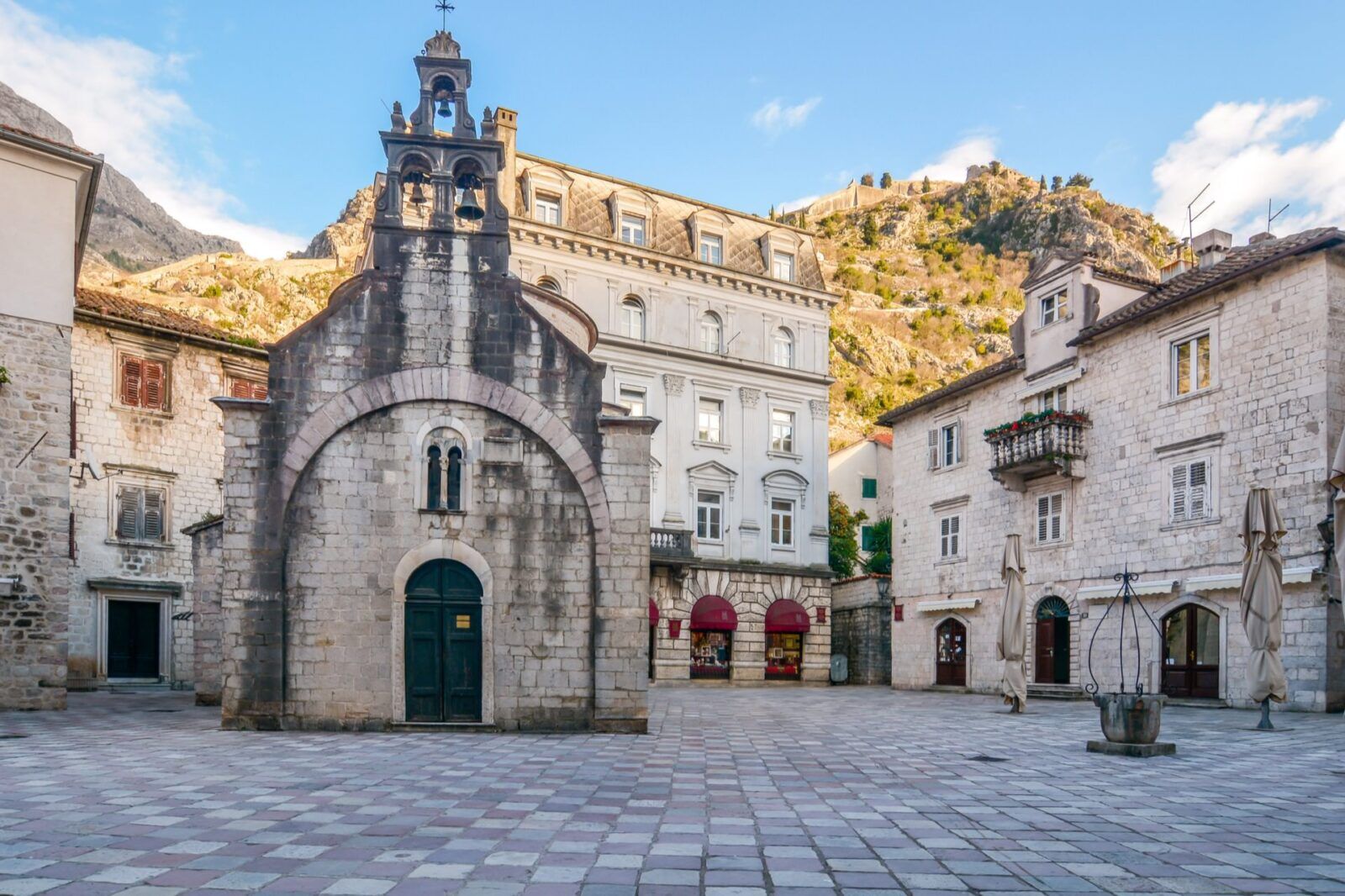
Church of Saint Luke
Montenegro’s Church of Saint Luke in Kotor uniquely blends Roman and Byzantine architecture, surviving the 1979 earthquake unscathed, with fragments of original frescoes still visible.
Architectural and Historical Significance
The Church of Saint Luke in Kotor, located on Piazza Greca, exhibits traits of both Roman and Byzantine architecture. This church is the only edifice in town that did not suffer significant damage during the 1979 earthquake. Moreover, it was painted immediately after construction, with only fragments on the south wall remaining today.
Daskal Dimitrij, the founder of the Boka Kotorska painting school Rafailovic, created the iconostasis in the 17th century. Indeed, this church originally served as a Catholic school until the mid-17th century. Consequently, due to wars and the arrival of Orthodox people in Kotor, it was given to Orthodox believers, representing a testimony to the harmonious co-existence of Catholic and Orthodox communities.
Unique Features and Cultural Heritage
The Church of Saint Luke is significant today because it has two altars: a Catholic one and an Orthodox one. The floor was made of tomb panels on joined graves of Kotor citizens, as burials were held in the church itself until the 1930s.