
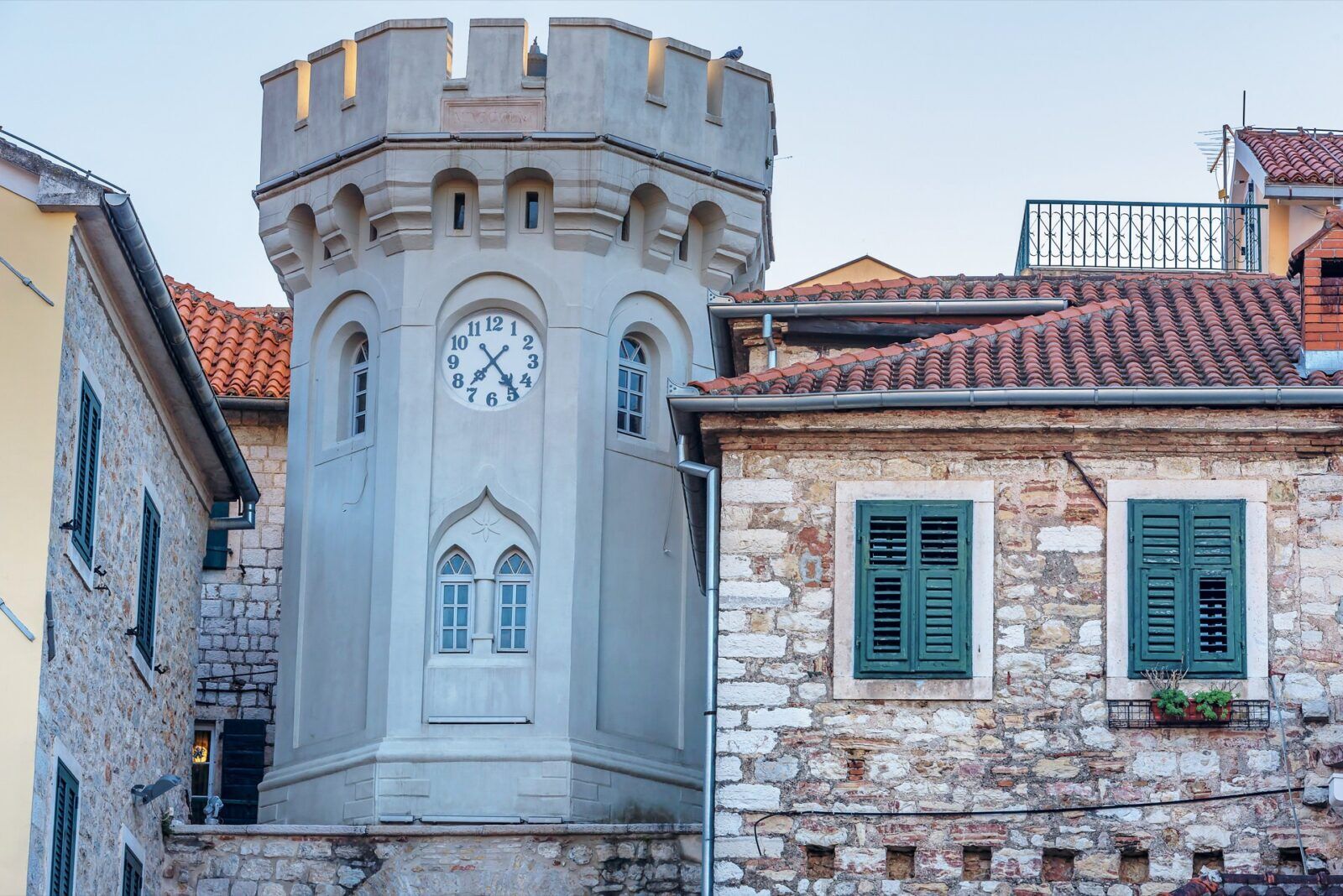
Herceg Novi Old Town
Herceg Novi Old Town is a historic coastal settlement in Montenegro, founded in the 14th century, known for its blend of medieval fortresses, churches, and scenic staircases that offer a unique cultural and recreational experience.
History and Cultural Significance of Herceg Novi Old Town
A visit to the Herceg Novi Old Town will surely bring you great pleasure. While it shares similarities with many coastal towns, certain elements make it special. Indeed, it represents the best fusion of history and culture, tradition and spirituality, past and modern times. Founded by the king of Bosnia, Tvrtko I Kotromanic, the town was initially called Sveti Stefan. Historical records indicate it is about six centuries old, and its tumultuous history is evident through fortresses within the bulwarks, such as Spanjola, Forte Mare, and Kanli kula, along with numerous palaces and churches. Consequently, many culturally historical monuments and modern edifices preserve the Christian spirit and serve as a treasury of artistic and cultural wealth.
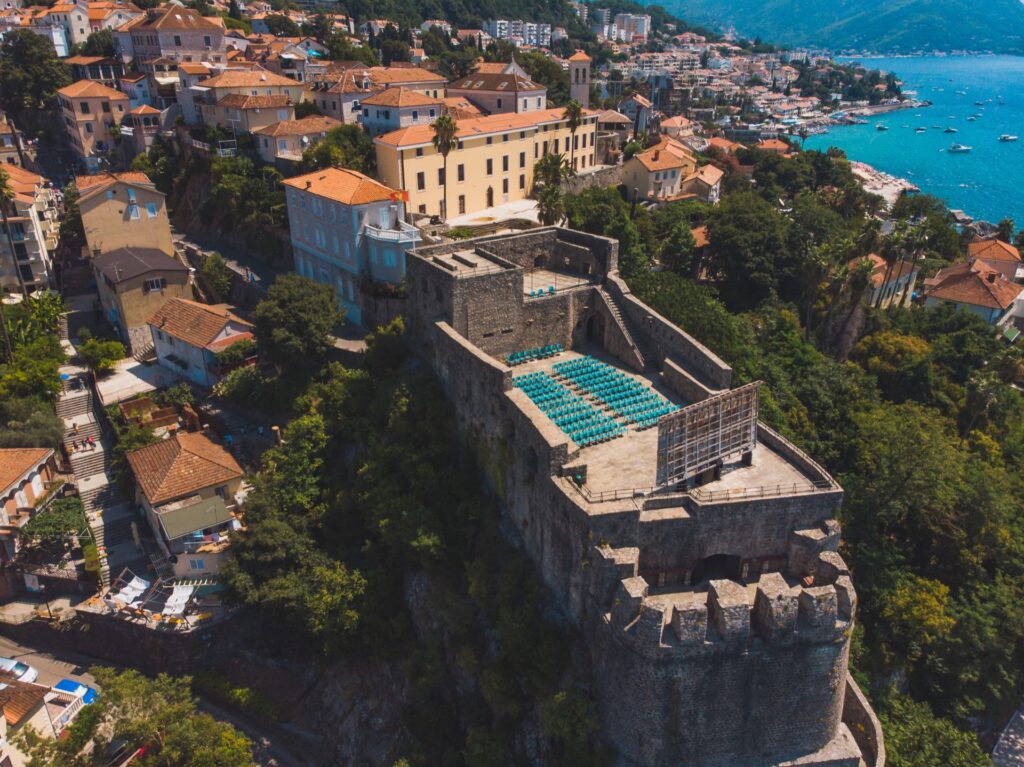
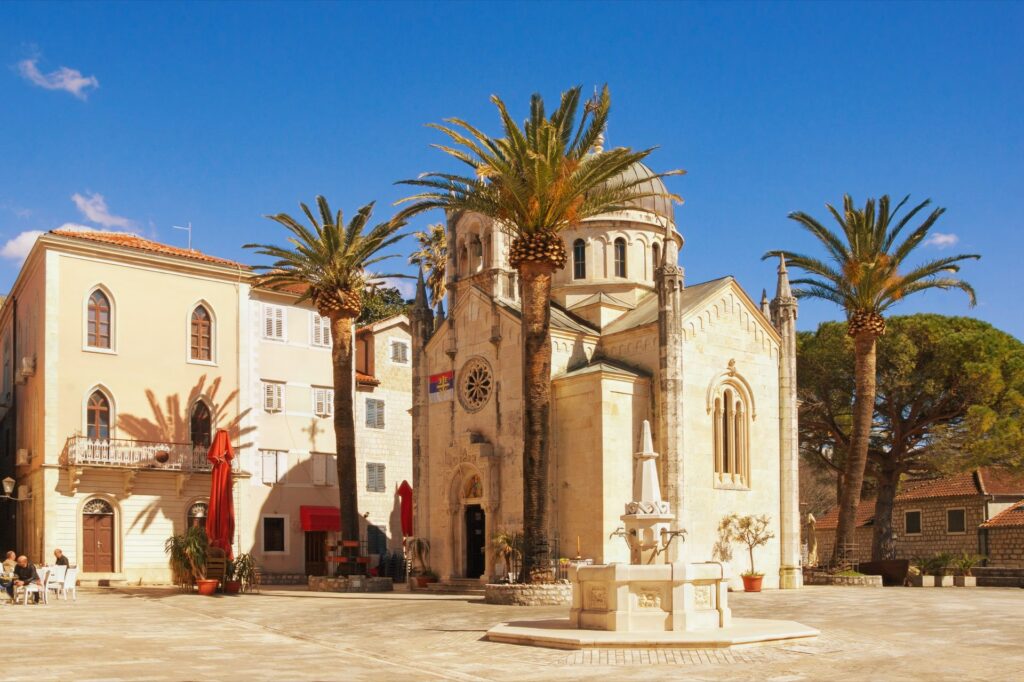
For a long time, the Herceg Novi Old Town served as an intermediary in trading connections with neighboring states, rivaling Dubrovnik. The old town is surrounded by walls built from the 14th to the 19th century. If you plan to tour it, beyond the fortresses like Forte Mare (14th century) and Kanli kula (15th century), consider visiting the central part of the old urban core. This area features two main squares: the Square of Herceg Stjepan with the Church of Sveti Arhandjel Mihajlo and the Square Mico Pavlovic with the Church of Sveta Jeronima. Moreover, the town boasts artistic galleries, a national library, and a city archive.
Unique Features and Experience in Herceg Novi Old Town
The trademarks of the Herceg Novi Old Town are its stairs, locally known as SKALINE. On most narrow and beautiful streets, these stairs are very long, often strenuous for tourists and guests to climb. However, they don’t have to be tiring if viewed as a form of recreation.