
The History of Podgorica
Podgorica is one of the oldest settlements in this part of the Balkans. Its great natural treasures, strategic position, and fertile soil led to its early development in prehistoric times. The history of Podgorica is marked by numerous name changes: from Birziminijum and Alata in ancient times, to Ribnica, then Podgorica, Titograd in 1946, and back to Podgorica in 1992.
Podgorica is the capital of Montenegro, with a rich history dating back to prehistoric times. Its strategic location and natural resources have shaped its development through Illyrian, Roman, Slavic, Ottoman, and modern eras, making it a fascinating destination for history enthusiasts.
Ancient Origins and Illyrian Settlements
As with much of the Balkans, the area of Podgorica was settled by early Illyrian tribes. Through rare antique records and archaeological investigations, scientists piece together its early history. Illyrians lived a primitive lifestyle, focusing on cattle breeding and later mining. Indeed, many regional names today originate from Illyrian roots.
A strong Illyrian tribe, the Ardijei, had bastions in Risan, Skoddar, and Medun. Important battles for subjugating Illyrian tribes occurred near these settlements, close to present-day Podgorica. Antique historians first mentioned these areas, describing Medun as a “town in the land of tribes of Labeati.” In the 1st and 2nd centuries A.D., Pliny and Ptolemy mentioned the Dokleati tribe and the town of Duklja.
Although no evidence confirms a major lodgment in Podgorica during this period, it is believed the Dokleati had a bastion here to defend their center near Duklja. The mouth of Ribnica in Moraca was ideal for defense, likely used in tribal conflicts and resistance against Roman conquerors.
Roman Influence and Early Development
The Roman arrival introduced new economic relations, resource usage, and colonization. This area, named Prevalis, had its capital in Diokleja. Trade development spurred road construction and lodgment growth, notably Duklja, officially called Respublica Docleatium. Pope Gregory mentioned two bishops of Duklja in the early 7th century.
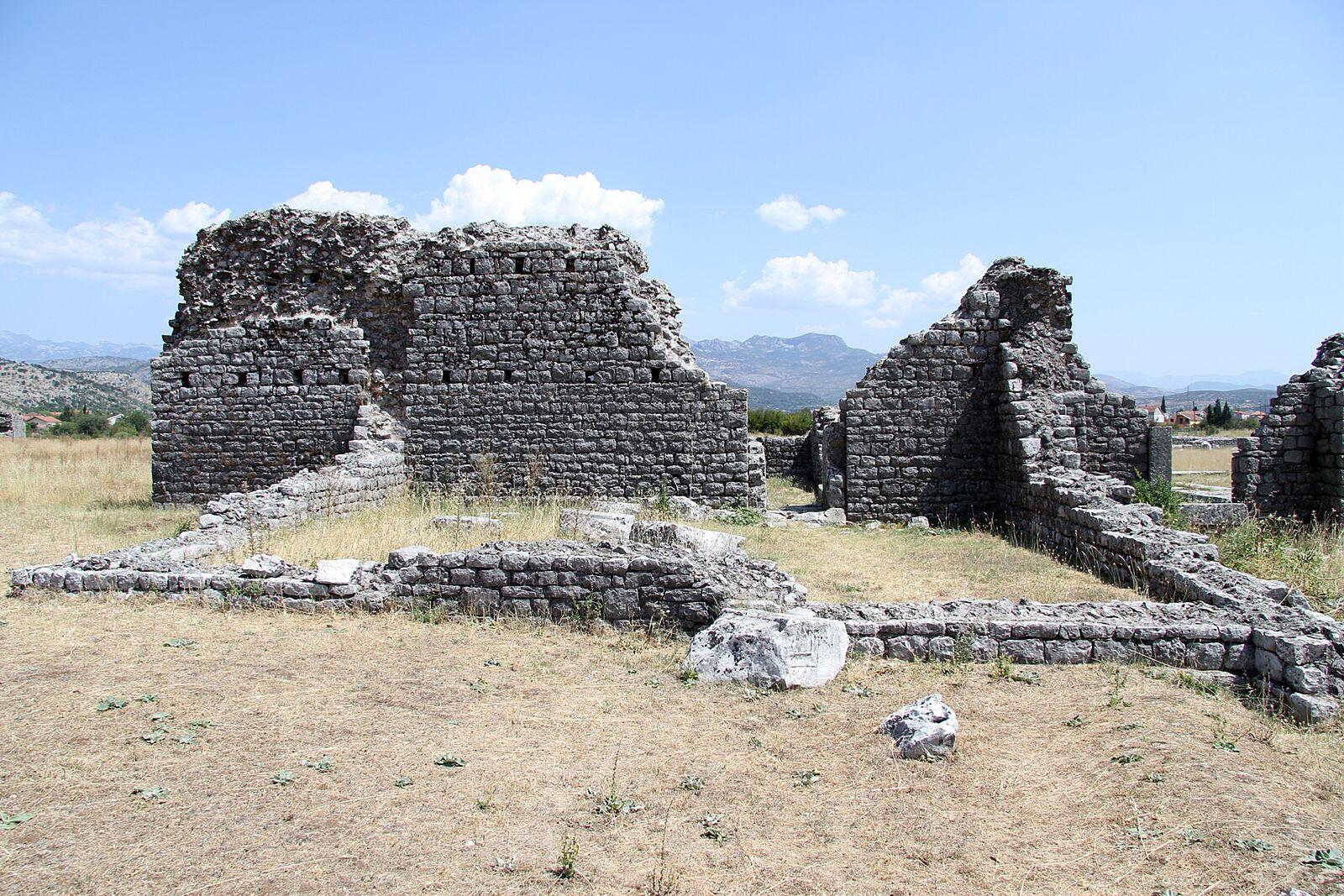
In the 7th century, Duklja and the smaller Roman lodgment Birziminijum, possibly in present-day Podgorica, declined. Birziminijum was a crucial station on the road from Skoddar to Narona. An Italian geographer noted it was 10 km from Medun. Consequently, it grew from a caravan station into a fortified town. Research revealed Roman plumbing from Ribnicka Vrela to Duklja and the old town in Podgorica, indicating a significant settlement.
After the 6th century, slavery and civilization faced major impacts. Many lodgments were destroyed. A damaging earthquake in 518 A.D. devastated Duklja. The arrival of Slavic peoples led to colonization and early state formation, initially slavery-military, later feudal. In the 10th and 11th centuries, no lodgments in Podgorica are mentioned.
Medieval Transformations and Name Changes
Indications suggest a lodgment was built on Ribnica’s banks in the 10th century. Confirmations come from texts of Podgorica’s church Sveti Djordje and research by Russian historian Rovinski. The history of Podgorica shows it lost significance compared to Skoddar, Zeta’s former center. In the 12th century, Ribnica is first mentioned, located at Birziminijum’s site.
Raska’s aristocrat Zavida hid here, where his son Stevan Nemanja was born in 1114. He founded a dynasty ruling Serbia until the 16th century. He was baptized in the church of Sveti Djordje, still in Podgorica today. The church’s existence and Zavida’s hiding imply Ribnica was a fortified town. In the 14th century, Ribnica was a trade intermediate between Dubrovnik and Raska, noted by Tzar Dusan.
In 1326, Podgorica is first mentioned. This shows Ribnica and Podgorica coexisted, likely as separate lodgments—Podgorica as a town, Ribnica as a district. Later, Ribnica probably became Podgorica, retaining both names during the transition.
Ottoman Rule and Military Significance
During the Middle Ages, Podgorica grew into a significant trading spot at the crossroads between coast and interior. From the 14th century, it gained military-political importance against Ottoman invasion. After rulers changed from despot Stevan Lazarevic to Stevan Crnojevic, and Medun fell to Turks in 1455, Podgorica‘s fate was sealed. That year, it surrendered to Venetians to avoid Turkish conquest.
Turks soon renewed and fortified it due to its economic and political role. It became a key military position in battles with hill tribes. The town underwent Islamization, though citizens resisted. In the 17th century, Turkish traveler Evlija Celebija noted Podgorica‘s importance, describing its fortress with towers and bulwarks, housing about 700 soldiers. Thus, Podgorica became a military town launching invasions into free Montenegro.
During the 18th century, Podgorica is mentioned several times, including the imprisonment of bishop Danilo, founder of the Petrovic dynasty. Turkish military expeditions from here targeted Montenegro and hill tribes. Weakening Turkish feudalism led to increased terror over citizens in the 19th century.
Liberation and Modernization
Two 19th-century descriptions depict Podgorica. A French consul called it the main place in the region with 950 homes and about 6,540 citizens. An English traveler noted it as a nice place with a good market. The 19th century saw Podgorica‘s liberation, despite Ottoman efforts to maintain influence. A murder sparked diplomatic clashes, and the 1875-1878 war led to its annexation to Montenegro in 1878. On January 27, 1879, Turkish forces left, and Montenegrin army entered, welcomed by Orthodox citizens.
With Turkish rule ended, ethnic and socio-cultural changes occurred. Immigrants received land, and a new town was built on Ribnica’s right bank by the late 19th century. Podgorica developed quickly, with wider streets and a square featuring a monument to Montenegrin fighters. It became a strong market, with trades, crafts, and the founding of Podgoricka banka. Italian capital built the Tobacco Factory, attracting foreign investment.
Economic prosperity spurred cultural life. Primary education was introduced for both sexes and confessions. A reading room, singing association “Branko,” the first newspaper, and a Lower High School in 1907 were established. Under Prince Nikola I, Podgorica became Montenegro’s administrative-political center, considered for capital relocation from Cetinje, but military instability prevented it.
20th Century Conflicts and Rebirth
World War I brought Austro-Hungarian occupation and suffering. After liberation, on November 26, 1918, the Great Folk Parliament dethroned the Petrovic dynasty and proclaimed Montenegro’s union with Serbia under the Karadjordjevic dynasty, forming the Kingdom of SHS, later Yugoslavia. Between the wars, Podgorica did not develop properly, facing conflicts between aristocracy and deprived citizens. The Podgorica district had institutions like Zeta financial bureau and Post office, with about 37,000 citizens, rising to 50,000 near WWII, mostly engaged in agriculture.
World War II heavily marked Podgorica. From bombings in 1941 to liberation in 1944, the town was destroyed, with thousands dead. On December 19, 1944, it was liberated, celebrated as Municipality Day. After the war, it was renamed Titograd, becoming capital of Socialist Republic of Montenegro in SFR Yugoslavia. It developed rapidly, with schools, factories, and institutions, leading in aluminum, tobacco, furniture, and agriculture, notably the “13 jul” combine. Scientific institutions around the University of Montenegro made it a cultural center.
In the 1990s, conflicts in former Yugoslavia caused stagnation. After the wars, Titograd, renamed Podgorica in 1992, oriented towards European standards. In recent years, Podgorica has changed rapidly, with about 170,000 citizens witnessing new architecture, modernized infrastructure, and growth into a European metropolis.