
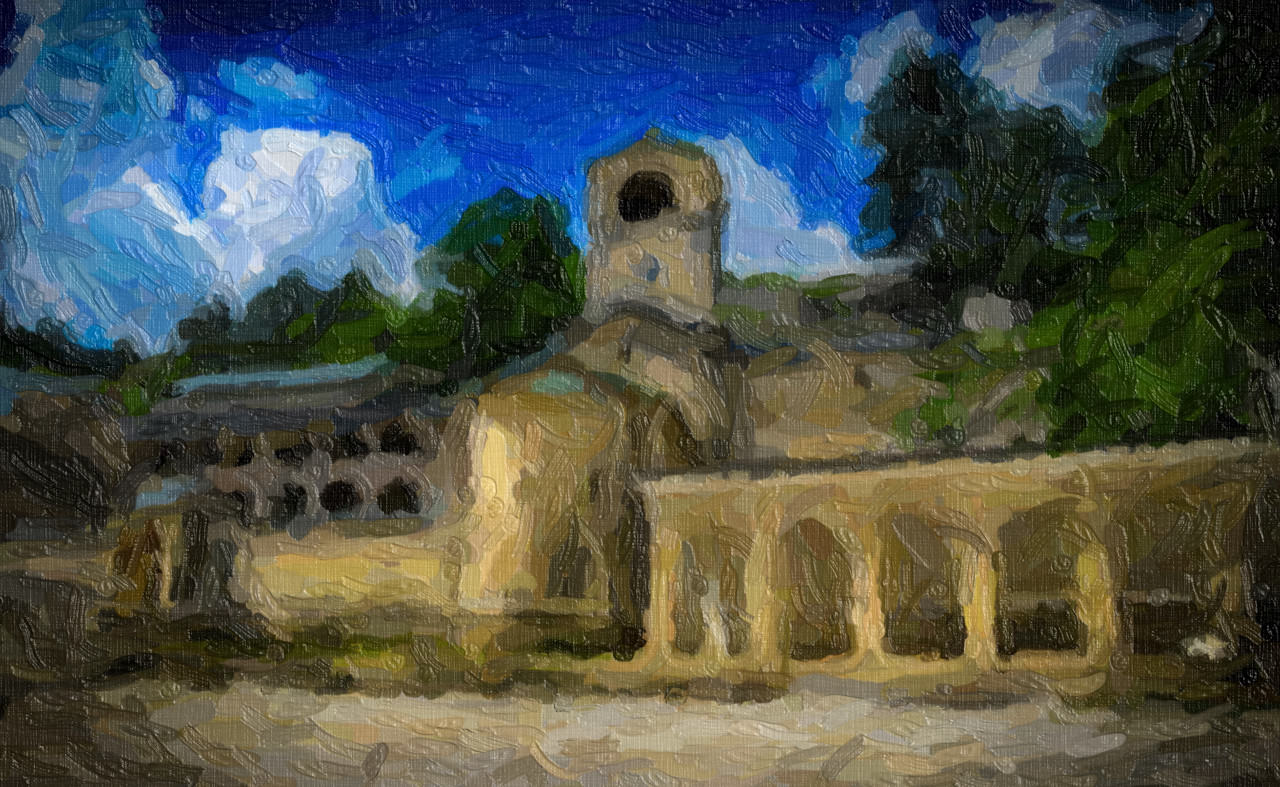
The History of Cetinje
Cetinje, Montenegro’s historic capital, was founded by Ivan Crnojević in the late 15th century. He established a castle and monastery in Cetinjsko polje, named after the River Cetina, marking the beginning of the history of Cetinje as a political and religious center.
Founding and Early Development
Ivan Crnojević is considered the founder of Cetinje. He built a castle and a monastery in the plane below the famous Montenegrin Mountain Lovćen. According to written data, by the end of the 17th century, the River Cetina flowed down the plane, so that part of the town was called Cetinjsko polje (The Field of Cetinje). In Cetinjsko polje, a small inhabited village existed, from which the later town got its name. The history of Cetinje is first mentioned in historical documents in 1440. Around 1450, a church known as Vlaška church was built in Cetinje.
About the development and origin of the town, first notes were made at the end of the 15th century. Ivan Crnojević chose this place as his capital and built a castle in 1482. According to some documents, the castle was ruined before 1650, but historians have not found the reasons or those responsible. Two years after building the castle, in 1484, a monastery dedicated to the Holy Mother of God was constructed, but its remains were not preserved.
After the disappearance of the State of Crnojević, Cetinje maintained its status as a political and religious center of Montenegro. With the parting of the Crnojević dynasty, religious heads of the church continued to rule from the monastery of the Holy Mother of God. At that time, these religious leaders were the most significant personalities in Montenegro.
Ottoman Conflicts and Religious Influence
Towards the end of the 15th century, a great part of Montenegro was governed by Turkish conquerors. From 1499 to 1513, larger parts were annexed to the Skadar sanjak, but areas like the Hills and Northwest retained nominal freedom. Under Lovćen Montenegro, with Cetinje as its center, managed to retain permanent freedom. A very important function in those years was the legislative body called “Opštecrnogorski zbor” (General Montenegrin Gathering). The first gathering, defined as a military-democratic parliament, reshaped state organization after the crash of the Crnojević state. Its first decision was to offer alliance to Venice in the war against the Turks (1499–1503).
In 1579, Opštecrnogorski zbor signed the first bilateral contract between under Lovćen Montenegro and Venice, maintaining Venetian postal communication with Constantinople (Istanbul). Almost the entire 16th century, Cetinje was marked by the ruling of the Cetinje archbishopric. Archbishops owned feud estates belonging to free peasants. In 1577, with the intervention of the Peć patriarchate, the archbishopric received protection from the Turkish Sultan, but disputes with peasants were solved by compromise. The Archbishopric bent down to the fight for independence and freedom.
From 1603 to 1613, the Cetinje archbishopric turned from a passive observer into an active political force. It participated in defensive and liberating fights, such as battles with Turks near Lješkopolje. Montenegrin army was led by former metropolitan Ruvim II Boljević. In those years, the autocephaly action of the Montenegrin Orthodox Church institutionalized as the Montenegrin archbishopric began. Ruvim II, spiritual ruler and political head, led from 1593 to 1637.
By decision of the General Montenegrin gathering from Cetinje, Montenegrins participated in battles of Venice against Turkey from 1645 to 1669. Help in arms constantly came from Cetinje and other free parts. From 1659 to 1662, Visarion II Kolinović was the religious head and first personality in gatherings. In 1685, Turks breached Cetinje and set the monastery on fire, but failed to establish control. From 1685 to 1692, Visarion III Borilović ruled. In 1692, Turkish commander Suleiman-pasha Bušatlija began a campaign but was forced to leave due to guerrilla attacks.
Petrović Dynasty and Modernization
In 1694, Savatije (Sava) Kaludjerović became metropolitan, succeeded in 1697 by Danilo Šćepčević, founder of the Petrović Njegoš dynasty. Bishop Danilo ruled until 1735, achieving the right of inheriting the bishop’s title in his family, meaning political primate in controlling Cetinje. From 1701 to 1704, he sacrificed for building a new Cetinje monastery, dedicated to St. Holy Mother of God, which was renovated several times after Turkish demolitions.
The beginning of the 18th century remained marked as “crucial” due to the event remembered by the “inquiry of the converts to Islam.” This event is praised in “Mountain Wreath” by Petar II Petrović Njegoš, though it is based on folk tradition. In 1711, administrators from Cetinje began establishing foreign policy connections with Russia, making Montenegro a Russian ally against Turkey. On July 28, 1712, Montenegrins won a battle with Turks, but on August 8, Turks stormed Cetinje again, setting the monastery on fire before leaving after five days.
In 1713, on suggestion of bishop Danilo, a gathering in Cetinje founded the Earth court for under Lovćen Montenegro, considered the first “Folk Government.” Vukadin Vukotić was elected president. In October and November 1714, Cetinje suffered destruction in a campaign by Bosnian vizier Numan-pasha Ćuprilica, but Turks left without establishing control. From 1714 to 1716, bishop Danilo resided in Russia, receiving financial help for the monastery. In 1717, the Venetian Senate confirmed his jurisdiction over Orthodox population on the coast.
In 1753, bishop Sava Petrović came to the throne, leaving political helm to Vasilije Petrović in 1750. Foreign policy developed dynamically, and in 1752, Montenegro gained Russian patronage. In December 1756, Montenegrins won a victory over Turkish army near Cetinje. After his return from Russia, bishop Vasilije brought a Russian colonel whose unfair report cooled relations with Russia. He died in 1756 and was buried in Petrograd.
In October 1767, Šćepan Mali, known as “false emperor,” was elected political leader, but his false identity was discovered. During his rule, the title of governor was established, with Jovan Radonjić proclaimed first man in 1770. Šćepan Mali was killed in 1773. In 1781, bishop Arsenije Plamenac ruled until 1784, when Petar I Petrović Njegoš began governing. His reign was wise and successful, introducing written laws and uniting hill tribes with under Lovćen Montenegro. He significantly influenced literature.
In June 1785, during Petar’s residing in Russia, Skadar deputy Mahmut-pasha Bušatlija damaged and burned Cetinje, setting the monastery on fire. In July 1796, after a great defeat of Turkish army, Mahmut-pasha attacked again in September, but was defeated and murdered at the battle on Kruši. This victory widened free territory by annexing Piper and Bjelopavlići. In October 1798, the Legal Code of Petar I was passed in Cetinje.
19th Century Progress and Diplomatic Rise
In 1805, Russia established the first diplomatic representative office in Cetinje, promoting it as a diplomatic residence. Metropolitan Petar I died in Cetinje in 1830 and was buried in the new monastery. He is remembered as “St. Bishop” for contributions like implementing Montenegro in Europe and opening schools. In 1830, Petar II Petrović Njegoš came to the throne, known as a great philosopher and poet. In 1831, a Controlling senate of Montenegro and Hills was elected, functioning as legislative, executive, and court power. Unsuccessful attacks on Podgorica occurred in 1831 and 1833.
During Petar II’s reign, Montenegro had a noticeable role in diplomatic circles. From 1837 to 1850, he produced outstanding literary works like “Mountain Wreath” in 1847. In 1838, with Russian help, a residential building was built in Cetinje, and a pool table was brought from Vienna in 1839. Njegoš was a skilled player. In October 1851, Danilo I Petrović Njegoš came to the throne. In 1852, Montenegro was proclaimed a Principality, and Danilo became Prince, confirmed by Russia. In 1853, an agreement ended war with Turkey, and Danilo visited the Austrian Emperor.
In 1855, Prince Danilo made reforms: population register, army reorganization, Legal Code of 95 articles, and establishment of Guard unit. In 1856, news from Paris disappointed expectations of independence. In May 1858, Montenegrin army destroyed and occupied Kolašin. On August 1, 1860, Prince Danilo was killed in Kotor, succeeded by his nephew Nikola I Petrović (1860–1918). Under King Nikola, Montenegro gained importance in all fields, and Cetinje became a center for diplomats and literates. New schools and hospitals were opened, and military advanced.
In September 1862, peace with Turkey stabilized life. From 1863 to 1868, work intensified on literacy and education, with a temporary seminary opened and magazine “Orlić” published. In 1886, a contract between King Nikola and Serbian Prince Mihailo Obrenović was signed in Cetinje. Relations with Turkey were disturbed in 1874, and war broke out in 1876. In 1878, the Congress of Berlin recognized Montenegro as an independent state, widening territory to 9,476 km² with towns like Podgorica and Bar.
20th Century Changes and Legacy
Significant reforms in schooling began in 1879 with obligatory basic education. In 1880, Cetinje high school began working; in 1881, church reform was conducted; in 1884, first voluntary society and Montenegrin theatre were formed. In 1888, Baltazar Bogišić published the first property Legal code. In 1906, perper currency was introduced, and political parties began participating. In 1910, Montenegro was proclaimed a Kingdom, celebrating 50 years of King Nikola’s rule.
In 1912, Montenegro entered the Balkan War, expanding territory to 14,443 km² by 1913. It participated in war against Bulgaria, announcing World War I. In 1916, Montenegrin army surrendered, and King Nikola went into exile. In November 1918, the Podgorica parliament annexed Montenegro to Serbia, dethroning the Petrović-Njegoš dynasty. The Christmas uprising in January 1919 failed, and with the Versailles contract, Montenegro ceased to exist, and Cetinje lost importance.
King Nikola’s reign is remembered for political maturity and development. Cetinje was composed architecturally, with legations from countries like Austria-Hungary and Russia built. In 1921, King Nikola died in exile. Serbia’s influence lasted until World War II in 1941, when Montenegro was proclaimed a sovereign state. In 1941, Cetinje was taken by Italian occupying army until liberation in 1944. After the war, Podgorica became the capital, and Cetinje became a business, historical, and cultural center. With wars in former Yugoslavia in 1991, its functions declined, and enterprises closed, leading to economic challenges. Recent years have seen revitalization efforts, but the history of Cetinje remains rich, though social and economic life is still developing.