
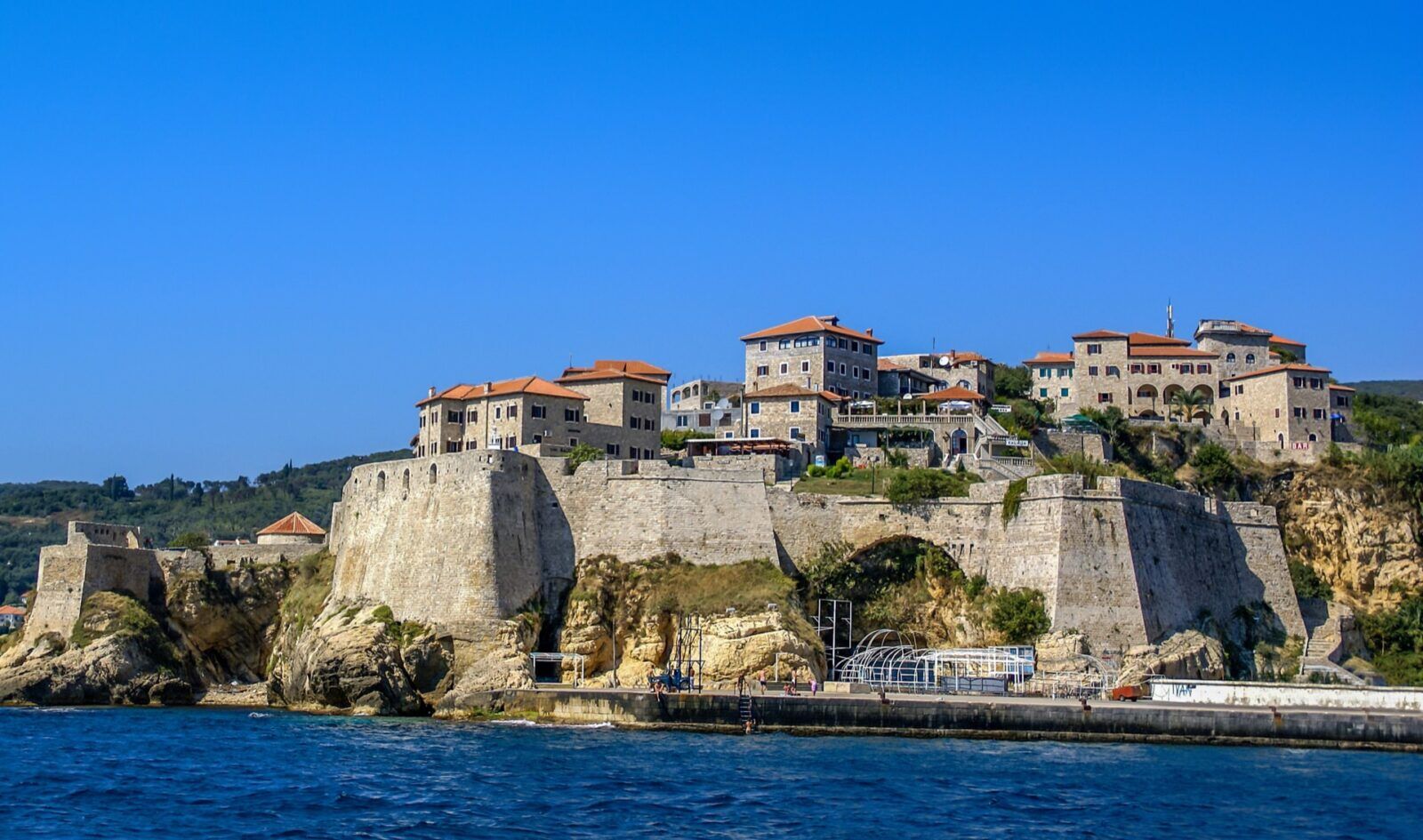
The History of Ulcinj
The History of Ulcinj reveals a coastal town over 2,000 years old, where Eastern and Western cultures have collided for centuries, leaving a rich historical legacy felt in every step.
Ancient Origins and Early Development
According to historical data, Ulcinj is one of the oldest towns on the Adriatic coast. Indeed, it is thought to be more than 2,000 years old. In this area, the cultures of the Orient and the West have collided for centuries, which can be felt in every step through the richness of the historical inheritance. Traces of the first settlements appear even before the 5th century B.C., and it is considered that Ulcinj was founded by Illyrians, people of Indo-European origin. At the time of the free Illyrian state, Ulcinj experienced its greatest bloom. The original name was Kolhinijum, named after Kolhidians, a tribe of Greek origin thought to be the founders of the old Ulcinj Lake.
Before 162 B.C., Ulcinj was ruled by an Illyrian tribe, Olcinijantas, which in the 2nd century B.C. was conquered by the Romans, so the ancient Colchinijum became Olcinijum. During the Roman Empire, Ulcinj received a status of a town with special privileges (Opida civijum romanorum), later becoming a town with temporarily independent status – a Municipium. After the division of the Roman Empire, Ulcinj belonged to province Prevalis, part of the East Empire, and the inhabitants became Christian.
Medieval Transformations and Conquests
Because of its extraordinary geographical location, mild climate, and relief, Ulcinj has been a target for conquerors for centuries. This Montenegrin town in the utmost south was frequently ruined during wars. Byzantium emperor Justinijan renewed and rebuilt Ulcinj, while Nemanjici, Balsici, Venetians, and Turks widened the town with new buildings.
In 1183, Ulcinj was taken over by the Great Serbian rector Stefan Nemanja, becoming one of the most significant coastal towns. As in the era of the Duklja rulers (since the 9th century onward), Ulcinj was a distinguished coastal town with mixed Slav, Albanian, and Roman citizens. It was not a permanent capital, but the potentates of Zeta and the Coast had their residences there.
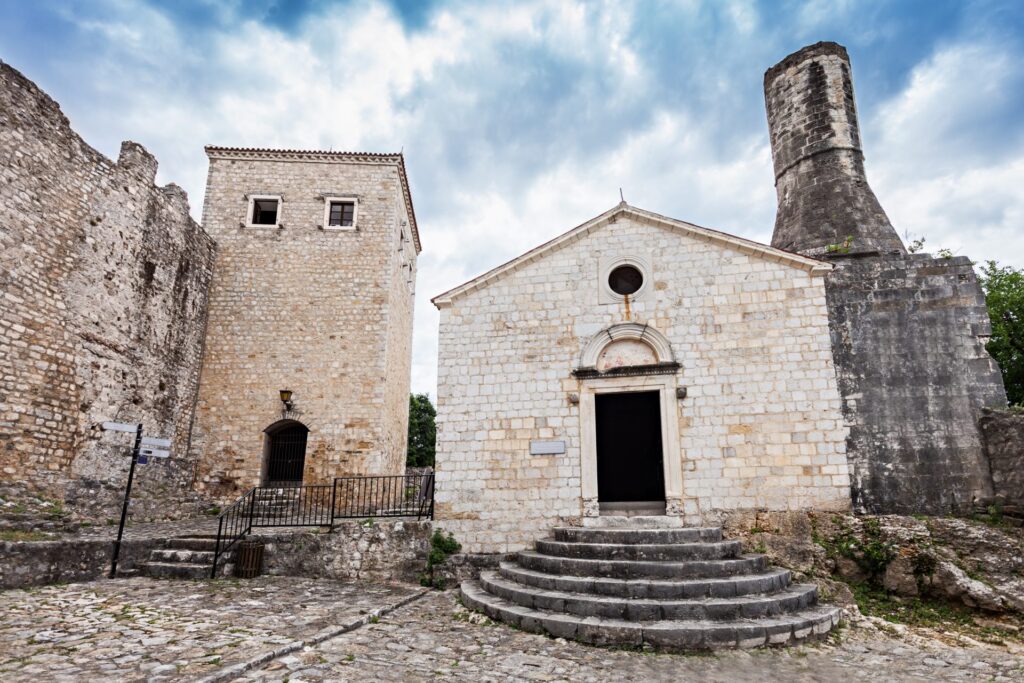
Especially in the period of the reign of Duklja and the state of Nemanjic, Ulcinj gained a medieval character. At that time, it was an important trading and naval center with autonomy inside the Raska state. The political significance of Ulcinj was very distinct in the era of Balsici, particularly under Djuradj Stratimirovic Balsic (1385–1403).
At the end of the 13th century, even the Mongolians attacked Ulcinj, performing an unsuccessful siege. After the failure, they ruined the town Svac (close to Ulcinj – today a dead town) and murdered all its citizens.
Venetian and Ottoman Rule
After the fall of the state of Zeta in 1405, Ulcinj was taken over by the Venetians, who ruled for 150 years. Ulcinj was under Turk reign until 1571, when it definitely fell into the hands of a heavy Turkish hand. Compared to adjacent towns on the Coast, Ulcinj fell fairly late into Ottoman control, 90 years after the fall of Herceg Novi (1482–1483).
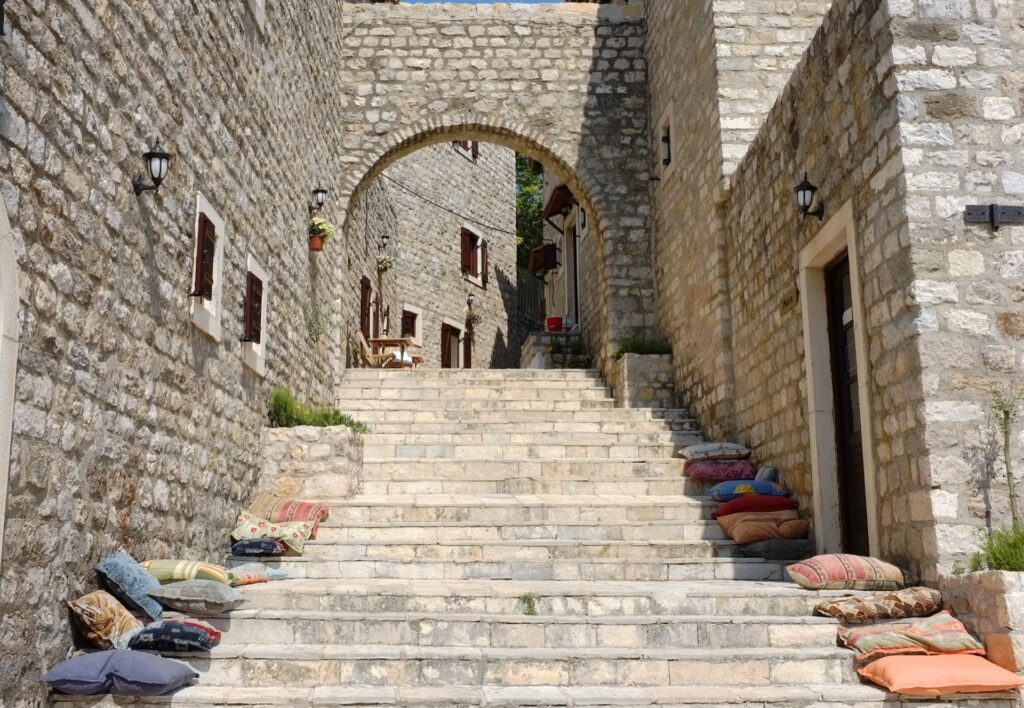
As during the reign of the Venetian Republic, Ulcinj had evidential fortification, strategic, naval, economic, and political significance, the Turkish conquerors continued to develop strategic goals. Still, during the era of Turkish reign over the town, Ulcinj gained a completely Oriental look. Mosques, Turkish baths, drinking fountains, watch-towers, inns, and burial chambers were built. Everything in town adjusted to the new masters.
Ulcinj was also famous for its long and rich naval and merchant tradition. In this town, sailing reached its top rise in the 17th, 18th, and 19th centuries. The naval trade of people from Ulcinj with their own boats took place in bigger harbors and trading centers of the Adriatic coast, Levant, and the Mediterranean. During the era of Turkish reign (1571–1880), Ulcinj with its trading fleet became the main pillar of the Ottoman Empire on the Mediterranean. Brave and skilful mariners from Ulcinj poorly acknowledged the state reign of the Turks. Until the proclamation of Mehmed Busatlija for the Grand Vizier of Skadar, Ulcinj was like a small republic. It is written that the Grand Vizier of Skadar, in deceit to restrain piracy, which grew more and more, sank liners from Ulcinj in port Valdanos, after which people from Ulcinj officially recognized the Turkish reign. During the era of the Montenegrin reign (1880–1918) in Ulcinj, 107 sailing boats were registered. People from Ulcinj were skilful mariners and good shipwrights.
Pirate Legacy and Naval Power
In the 17th century, the fleet of Ulcinj had 500 two-master ships sailing across the Mediterranean Sea. Many wars imperiled the development of the Ulcinj fleet. In the 14th century, Ulcinj was known for 400 pirates from Malta, Tunis, and Algeria who inhabited it after the Kanidian war (1669), turning it into a dangerous pirate nest, a characteristic that remained during the 17th and 18th centuries.
Modern Era and Contemporary Significance
After almost 300 years, at the beginning of 1878, Ulcinj was freed from the Turks. After the decision in the Berlin congress on November 10, 1880, Ulcinj was annexed to the Principality of Montenegro. The First World War, Ulcinj waited as an integral town of the former Montenegrin Principality. Even though King and Prince Nikola I Petrovic Njegos moved some Christian citizenship at the beginning of the 20th century, Islamic citizenship, loyal to the Principality of Montenegro, still prevailed in Ulcinj.
As in many other towns of the Montenegrin Coast, the vortex of the Second World War was felt in Ulcinj. In 1941, German and Italian troops conquered all of Montenegro, staying until the crash of Nazism at the end of 1944, when partisan troops liberated the utmost south town on the Montenegrin Coast – Ulcinj.
Beside its rich cultural and historical heritage, this ancient town is famous for its multiethnic and multinational structure of citizens who through history were united and offered resistance to conquerors, especially during the Second World War. On those important historical days, many commemorative plaques and busts all over town remind us.
After the Second World War, the renewal of all towns on the Montenegrin Coast, including Ulcinj, began. The great tourist potential that Ulcinj with its surroundings has even today was and remains a great chance for the successful development of the most important economic branch in Montenegro – tourism.
Today, Ulcinj is a famous multiethnic and tourist town in the South of Montenegro, which from year to year marks a greater number of domestic and foreign tourists.
Ulcinj Legend
As many other states, places, or towns are recognizable for historical events, famous individuals, fairy tales, or stories, Ulcinj and people from Ulcinj are famous for various and especially pirate ones. Through history, Ulcinj has been a pirate nest for many centuries. The town, starting from the 14th century, began to be inhabited by pirates from Malta, Tunis, and Algeria. The coastal part, from present Ulcinj all the way to Kotor, was the pirate nest. The pirates, especially during the 17th and 18th centuries, represented fear on the sea. Pirate gangs became so powerful that they attacked various trading ships sailing under various ensigns, robbed them, and quickly sailed to their bulwarks along the entire Ulcinj Coast.
The greatest damage from the dangerous attacks of pirate commanders, among whom the most famous were brothers Karamindzoja, Lika Ceni, Ali hodza, and others, was suffered by the Venetian fleet.
Beside invasions and robberies on trading ships, pirates from Ulcinj were famous for trading black slaves. Consequently, a great number of inhabitants in Ulcinj were black people from different African countries. Among old people from Ulcinj, it is mentioned how until 1878, 100 black people lived in Ulcinj, as well as the fact that among the slaves in the dungeons, the famous writer Cervantes dwelled, after whom one of the Ulcinj squares is named Slave Square. Still, the most famous and most gladly retold story among people from Ulcinj even today is the legend of the famous pirate Liko Cena.
Liko Cena, a man from Ulcinj, was the most famous pirate chief. Everyday with his pirate army, he attacked different trading ships, and sometimes even entire fleets. One time, Liko Cena with his company sank a ship with pilgrims traveling to a pilgrimage in Mecca. It was a very tragic event that echoed past Ulcinj. When the Turkish sultan heard of the accident, he ordered that Liko Cena must be found and imprisoned, proclaiming a rich award for catching or killing him. But then, another dangerous pirate, Lambro or Aralampija, originally from Greece, appeared on the sea. Skilful and fearless, Lambro quickly became a real “sea monster” for many trading ships and naval fleets. The news of Lambro’s misdeeds quickly got to the Turkish sultan, who proclaimed a rich reward for catching or killing Lambro due to immense damages.
However, time went by, and the sultan could not find Lambro. The only thing left was to send a message to Liko Cena, saying he would forgive everything if Liko Cena managed to destroy Lambro. The sultan soon did that, and Liko Cena accepted the call, binding himself to “either catch Lambro or die.” After some time, a duel occurred in which Liko Cena managed to kill Lambro. For the favor and loyalty, the Turkish sultan spared Liko Cena’s life, giving him the title of captain. Famous men from Ulcinj, descendants of Liko Cena, were also distinguished captains. The legend of Liko Cena is even today mentioned as an unusual event, with people from Ulcinj telling the story of how the most famous bandit from Ulcinj, thanks to destiny, became a captain.