
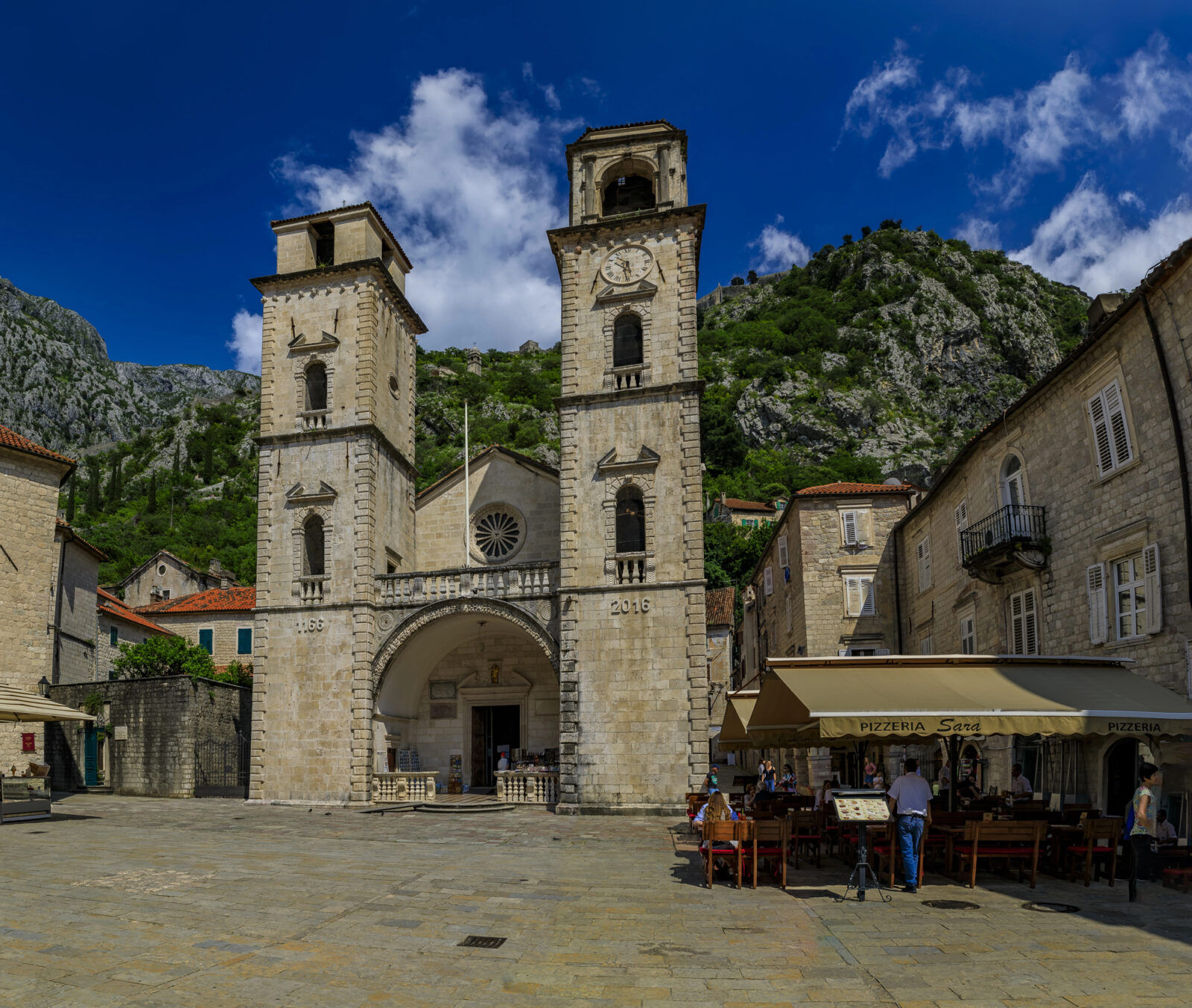
Saint Tryphon Cathedral
Saint Tryphon Cathedral in Kotor is a historic Romanesque church built in 1166, renowned for its ancient treasury, frescoes, and relics of Saint Tryphon, the city’s protector. It has undergone several renovations, including after earthquakes in the 16th and 20th centuries, blending original and Baroque elements.
History and Architecture of Saint Tryphon Cathedral
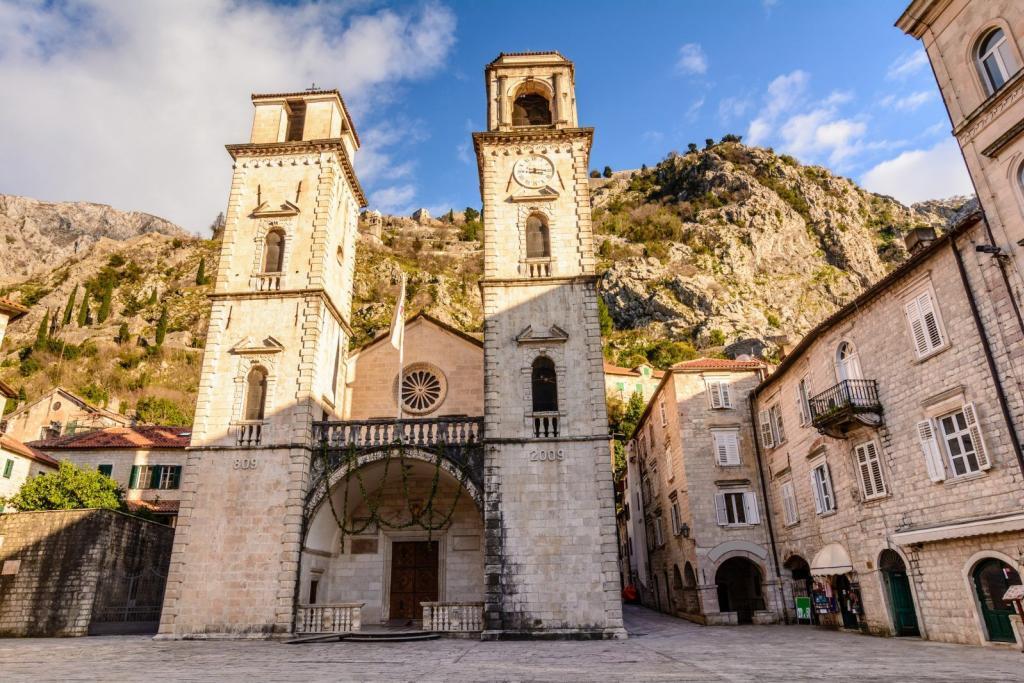
Cathedral of Sveti Tripun (St. Tripun) is located in Kotor, in the very center of the Old town. Kotor nobleman, Andrija Saracenus of which testifies the emperor writer Constantine Porpfrogenit, raised smaller church in honor of Sveti Tripun and after the devastating earthquake in 1979 the remains of this church have been found. It is thought that that church disappeared in fire, and that the new cathedral was built in XII century. Today it is known that this cathedral was built in 1166, in the place where at the beginning of IX century there used to be a smaller church which was dedicated to this same saint, and which was made in Roman style. In the devastating earthquake, which occurred in XVI century, the cathedral suffered great damages. The renewal happened in the period between 1584 and 1613, and the interior of the church at that point got the renascence baroque appearance. In the last renewal which happened after that last devastating earthquake in these areas in 1979, some elements of the cathedral got its original appearance, that is, the one which cathedral had when it was built in 1166.
Interior and Treasury of the Cathedral
This cathedral is known by the big treasury, which it has, because at the same time it is one of the oldest ones in the territory of Europe. Frescoes with which the cathedral has been painted with date from XIV century. In the interior of the church there is a stone ornament above the main altar on which one can see the painted life of Sveti Tripun, as well as the silver gilded relief of the saints. In this cathedral lie the relics of Sveti Tripun, in the coffin made of silver. What is important for tourists to know is that the relics of Sveti Tripun (St. Tripun), who otherwise is the protector of Kotor, at the beginning of IX century, more precisely in 809, were brought from Carigrad (Istanbul), and until the cathedral was built they were placed in a small Kotor church. The legend tells us that Kotor Navy took part in the welcoming of the relics of this saint, and the participation of Boka Navy in celebration of this important festivity was kept until nowadays.
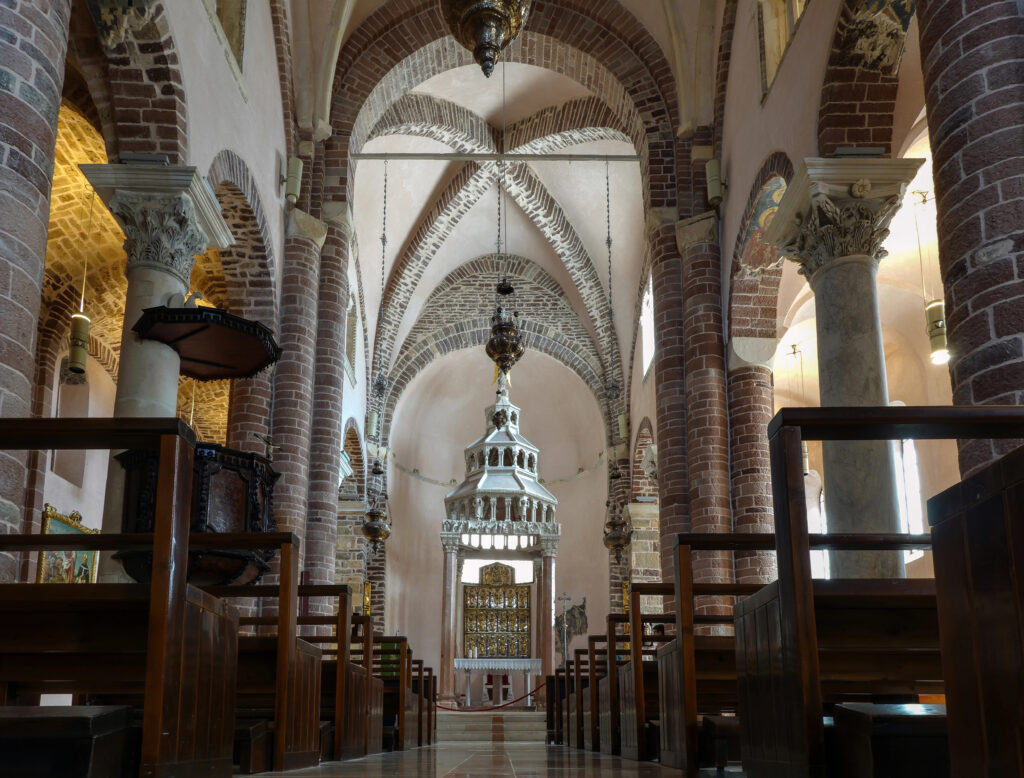
In the treasury of cathedral of Sveti Tripun (St. Tripun) one can also find the silver hand and a cross, which have been decorated with the ornaments and relief figures. You can also find a ciborium from the original church from the second half of XIV century. The new ciborium dates from the second half of XIV century and it is thought that it is a piece of work of the student of friar Vito Kotoranin (Vito from Kotor). Then there are also various Gothic sculptures, four marble altars from XVIII century which were made in Venice, silver golden rake which is a great piece of work of medieval Kotor’s goldsmith, as well as some famous work of Kotor housewives which were made in technique of Doborta embroidery.
Kulturni značaj i okolina
Tripundan (Dan Svetog Tripuna) je jedna od najvažnijih svečanosti koje se održavaju u Kotoru, i u Boki uopšte. Ova svečanost se u Kotoru održava od početka IX vijeka, kada su mošti ovog sveca donesene u Kotor. Ove svečanosti vezane su za Svetog Tripuna koji je umro u patnji u vrijeme rimskog cara Decija u III vijeku.
Biskupija je najstarija institucija u Kotoru. Današnja zgrada biskupije nalazi se odmah pored katedrale Svetog Tripuna, a pripadala je poznatoj porodici Drago.