
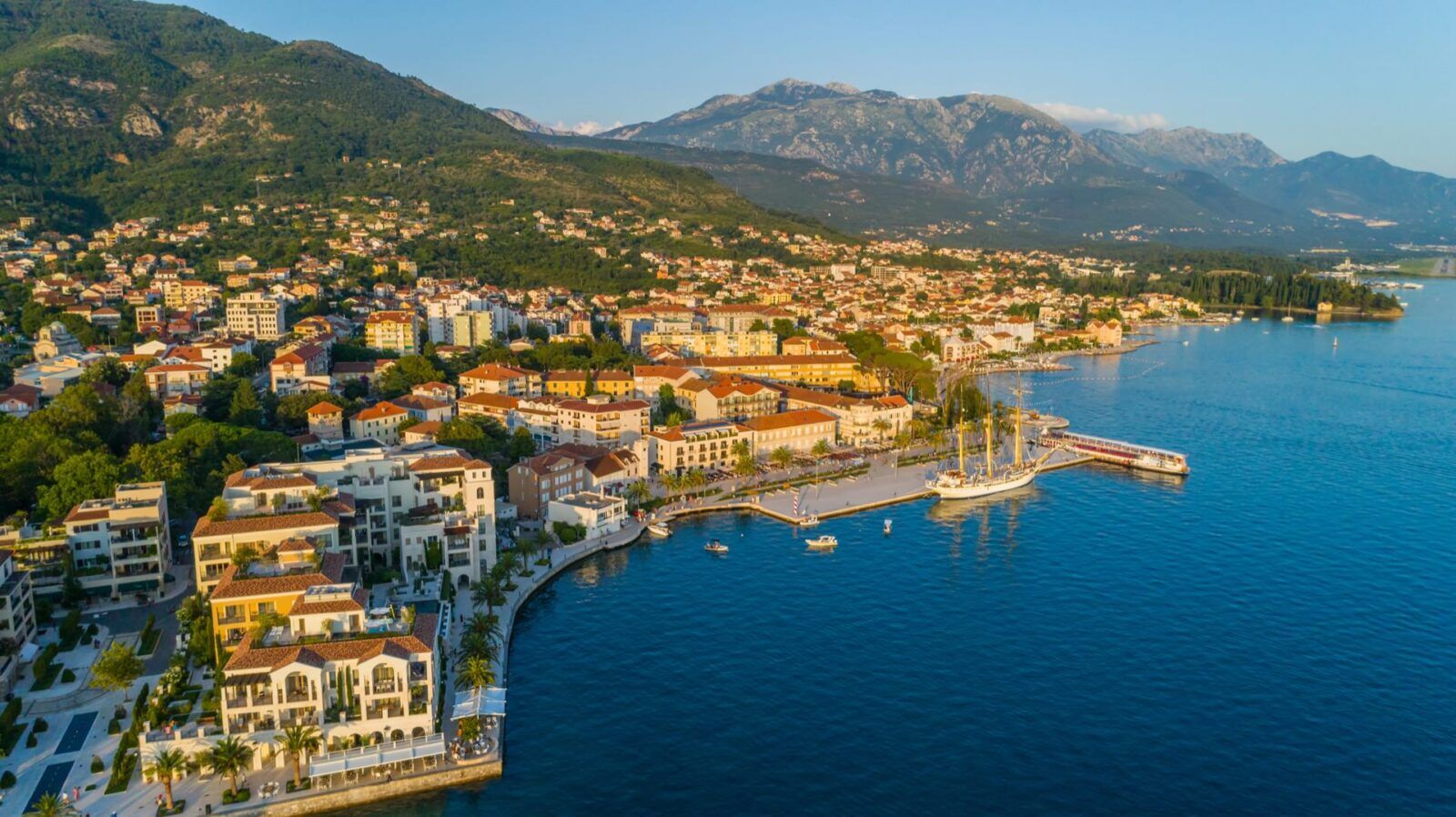
The History of Tivat
The History of Tivat is the story of Montenegro’s youngest coastal town, shaped by Illyrian, Roman, Serbian, Venetian, Turkish, and Austrian influences, with its name possibly deriving from Illyrian queen Teuta, Celtic origins, or Christian saints.
Origins and Naming of Tivat
According to historians, The History of Tivat marks it as the youngest town in Boka Bay and on the Montenegrin coast. There are three different opinions about its name. One suggests it comes from the Illyrian queen Teuta, who had summer cottages near the area. The second opinion links it to Christian saints like Theudorus or Theodosius. However, the third opinion clarifies that the name may derive from the Celtic word “teuto,” meaning town.
Historically, several epochs stand out in The History of Tivat, including Illyrian, Roman-Byzantium, Serbian, Venetian-Turkish, and Austrian reigns. Archaeological discoveries and historical sources best testify to these periods.
Key Historical Epochs in Tivat’s Development
Illyrian and Roman Periods
The Illyrian period in The History of Tivat ended around 168-7 B.C., marked by the fall of the Illyrian state, though few archaeological finds remain. Consequently, the Roman reign was significantly richer. Some older books mention a possible ancient town called Akruvijum near Boboviste, but this is not fully proven.
In historical documentation, Tivat is rarely mentioned as a specific locality, often linked instead to the broader Kotor district within Boka Kotorska.
Serbian and Venetian Influences
By 1185, the Serbian state ruled Boka, including Kotor and its district. Tivat was under the patronage of the medieval Nemanjic dynasty until 1370. Indeed, the Tivat bay became famous for spiritual development in the XIII century, when St. Sava established a Serbian church and built a monastery on Prevlaka Island.
In 1420, Venetians took over Boka Kotorska, including the Kotor district, Lustica peninsula, and Prevlaka Island. Their reign lasted until the late XVIII century, characterized by frequent battles with Turks.
Modern Transitions
The fall of the Venetian Republic in 1797 marked a significant turnover in The History of Tivat. Afterward, foreign authorities ruled for almost twenty years. In 1814, Austria took control until 1918. Moreover, after 1918, Tivat joined the Kingdom of Serbs, Croats, and Slovenians, later Yugoslavia.
In 1941, Nazi troops occupied Tivat until liberation by partisans in November 1944. After 1945, with the foundation of SFRJ, Tivat developed as a town focused on tourism, becoming a modern tourist destination today.
Tivat Legend: The Story of Sveti Marko Island
A story about Tivat is often connected to authentic legends, such as that of Sveti Marko Island, once called Stradioti. This legend dates back to the VII century, involving Greek soldiers gifted the island by gods for their bravery.
Weary and wounded, the soldiers recovered on the island, enchanted by its beauty. Over time, they felt guilty for past evils and prayed for peace, planting an olive tree as a vow. However, they soon broke their vows, leading gods to send a storm that destroyed their fleet and brought disease, killing all but the olive trees.
Because of this tragedy, locals renamed the island Stradioti, from the Greek word for soldier, preserving The History of Tivat through this enduring tale.